
 Screws
 Nails
Nails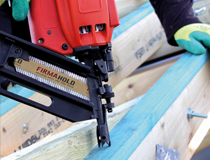
 Fasteners & Fixings
 Adhesives & Building Chemicals
 Powertool Accessories
 Fence & Gate Hardware
 Building Supplies

 Security & Ironmongery
 Site and Access


 Hand Tools
 Painting & Decorating

 Workwear, PPE & Safety



16 Gauge Nails for Nail Guns: Second Fix Sizes, Uses & Buying Guide

On June 11, 2026
Comments Off on 16 Gauge Nails for Nail Guns: Second Fix Sizes, Uses & Buying Guide
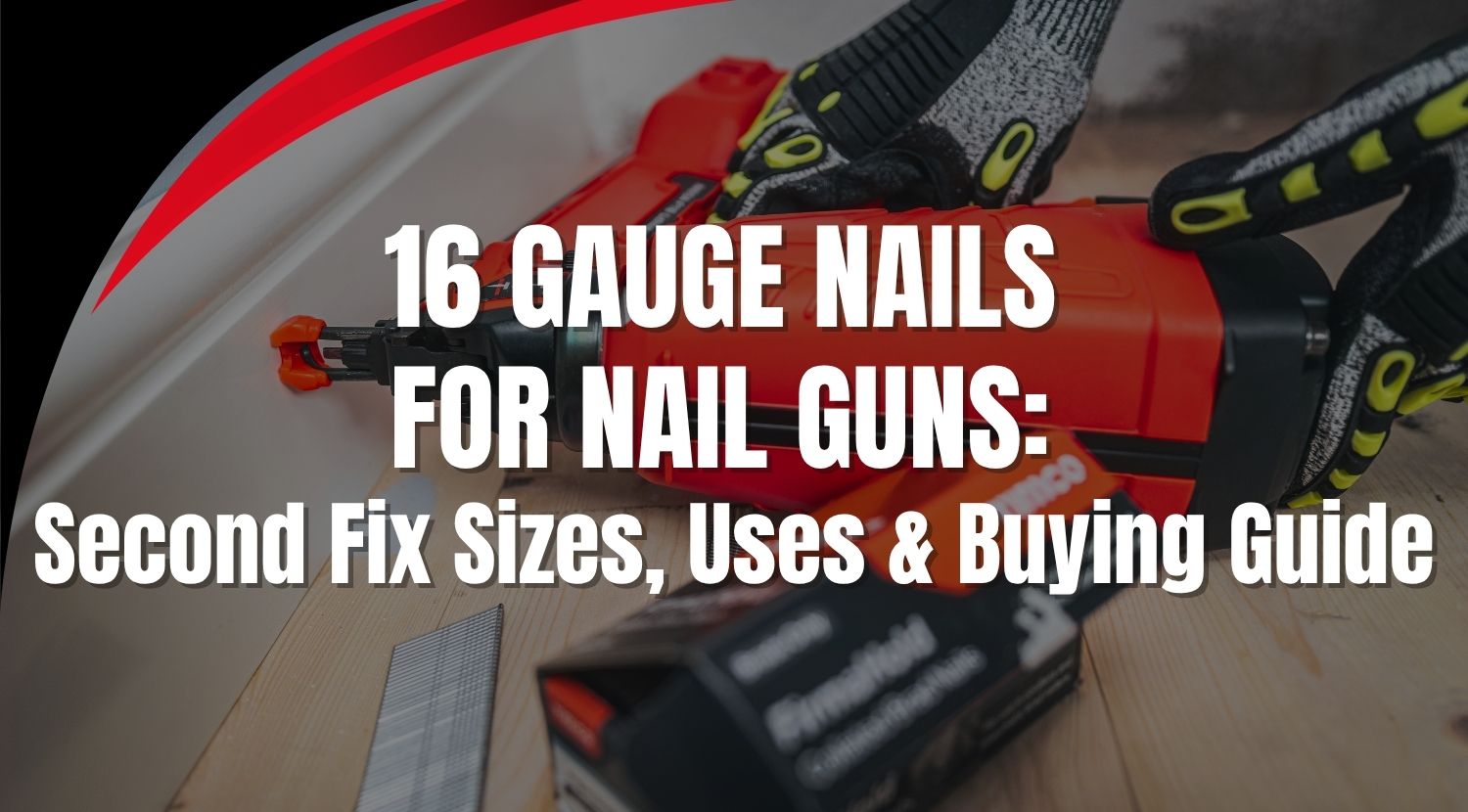
How to Choose 16 Gauge Nails for Second Fix Nail Guns
16 gauge nails for nail guns are widely used for second fix carpentry, offering a strong hold with a clean finish. This guide explains what 16 gauge nails are used for, the difference between straight and angled nails, and how to choose the right second fix nail gun nails for your project.
In this guide:
What are 16 gauge nails?
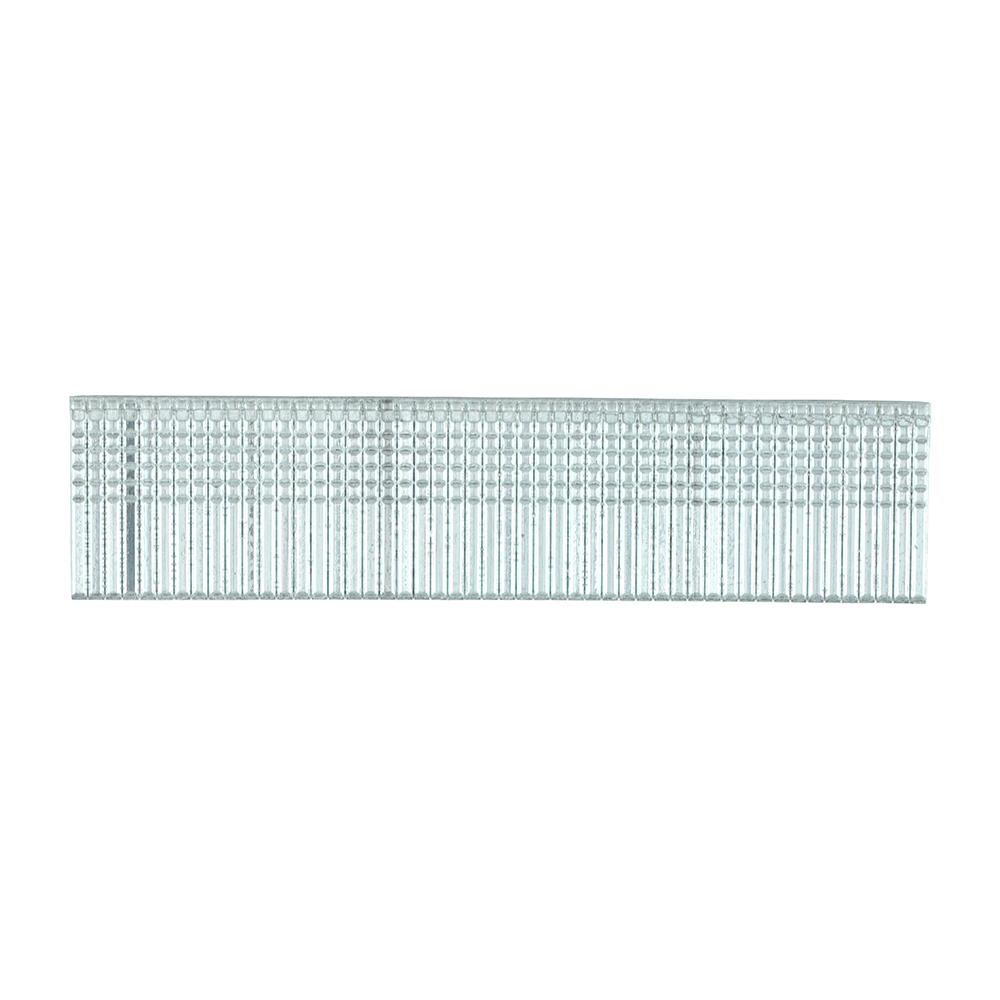
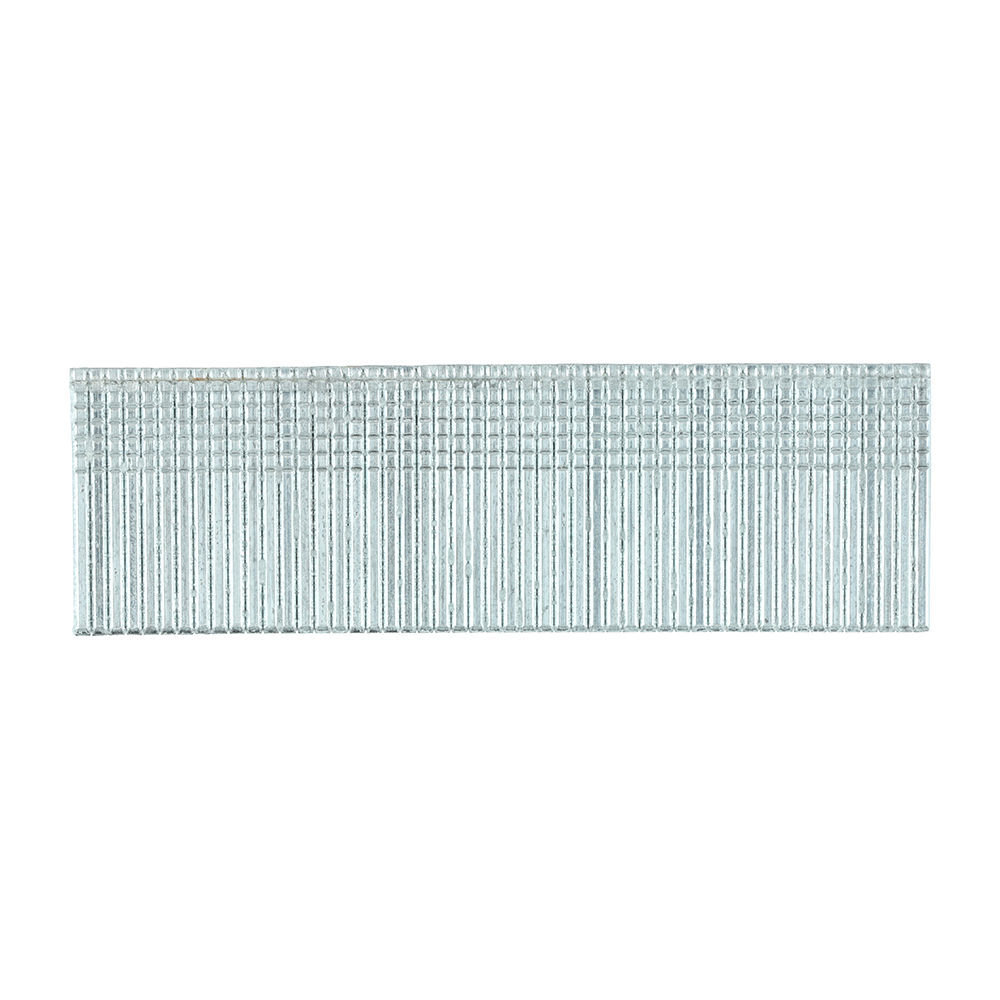
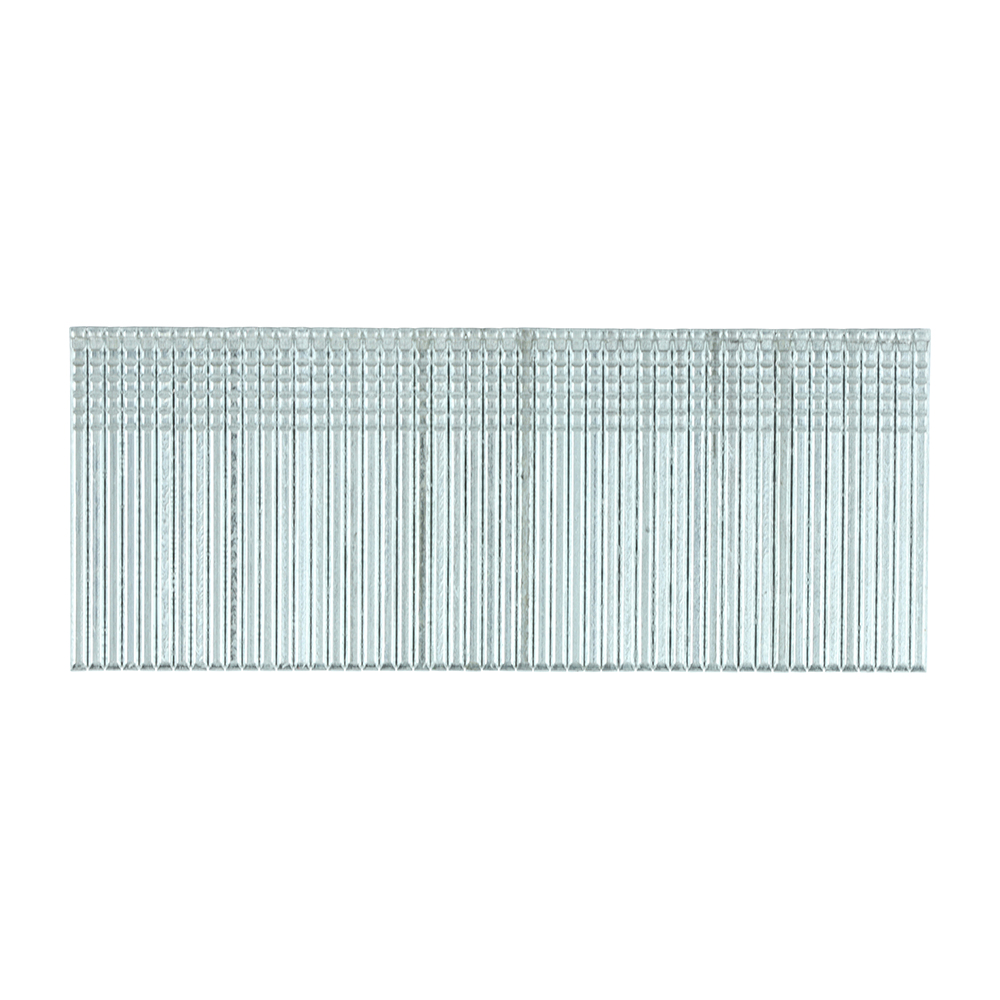
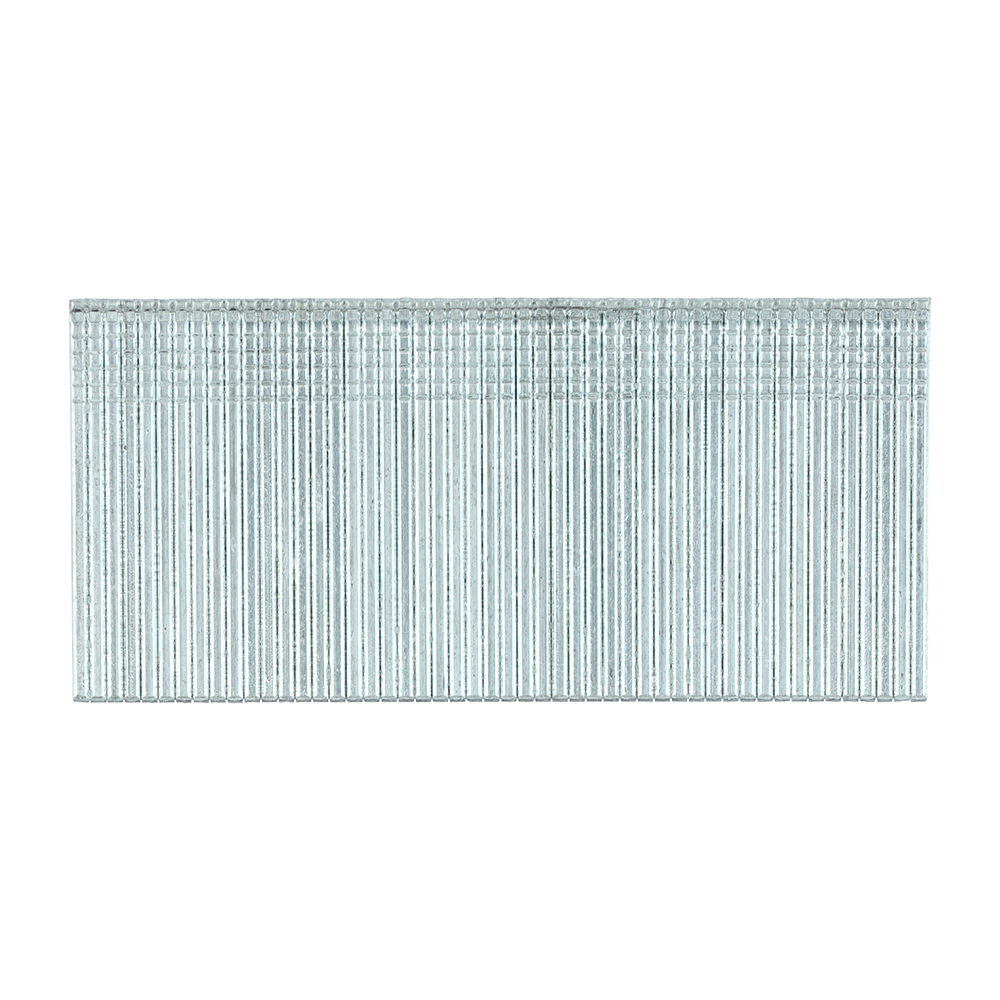
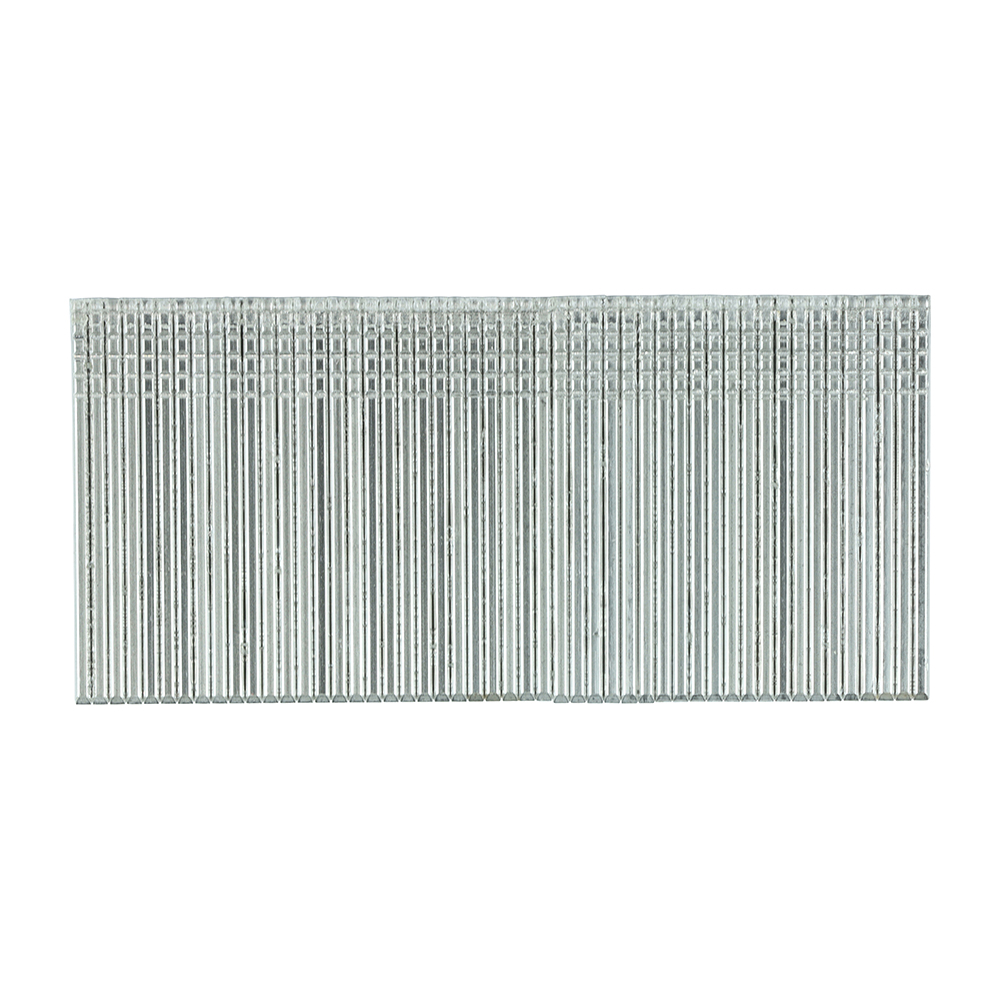
16 gauge nails are collated finish nails designed for second fix nail guns. They are commonly used for trim and finishing work where a stronger fixing is needed than smaller 18 gauge brad nails. They are widely used in second fix carpentry because they provide a secure hold while still leaving a relatively small hole that can easily be filled and decorated over.

What is a second fix nail gun?
A second fix nail gun is used during the finishing stage of construction once the structural work has already been completed. Second fix nail guns are commonly used for:
- Skirting boards
- Architrave
- Door linings
- Decorative trim
- Timber mouldings
- Light joinery
Unlike first fix nail guns, second fix nailers are designed to provide a cleaner and more discreet finish.
Quick answer: 16 gauge nails are one of the most popular choices for second fix nail guns because they provide a stronger fixing than 18 gauge nails while still giving a clean professional finish.
What are 16 gauge nails used for?
16 gauge nails are suitable for a wide range of finishing and trim applications where appearance and holding strength are both important. Typical uses include:
- Fixing skirting boards
- Installing architrave
- Door frames and linings
- Decorative mouldings
- Wall panelling
- Window boards
- General second fix carpentry
They are particularly useful where a stronger fixing is required without moving up to larger first fix nails.

FirmaHold Second Fix Nail Gun Nails
-
 Timco FirmaHold Collated Brad Nails - 16g x 38mm - 16 Gauge - Straight - A2 Stainless Steel
£17.74 ex VAT(£21.29 inc VAT)
Timco FirmaHold Collated Brad Nails - 16g x 38mm - 16 Gauge - Straight - A2 Stainless Steel
£17.74 ex VAT(£21.29 inc VAT)
-
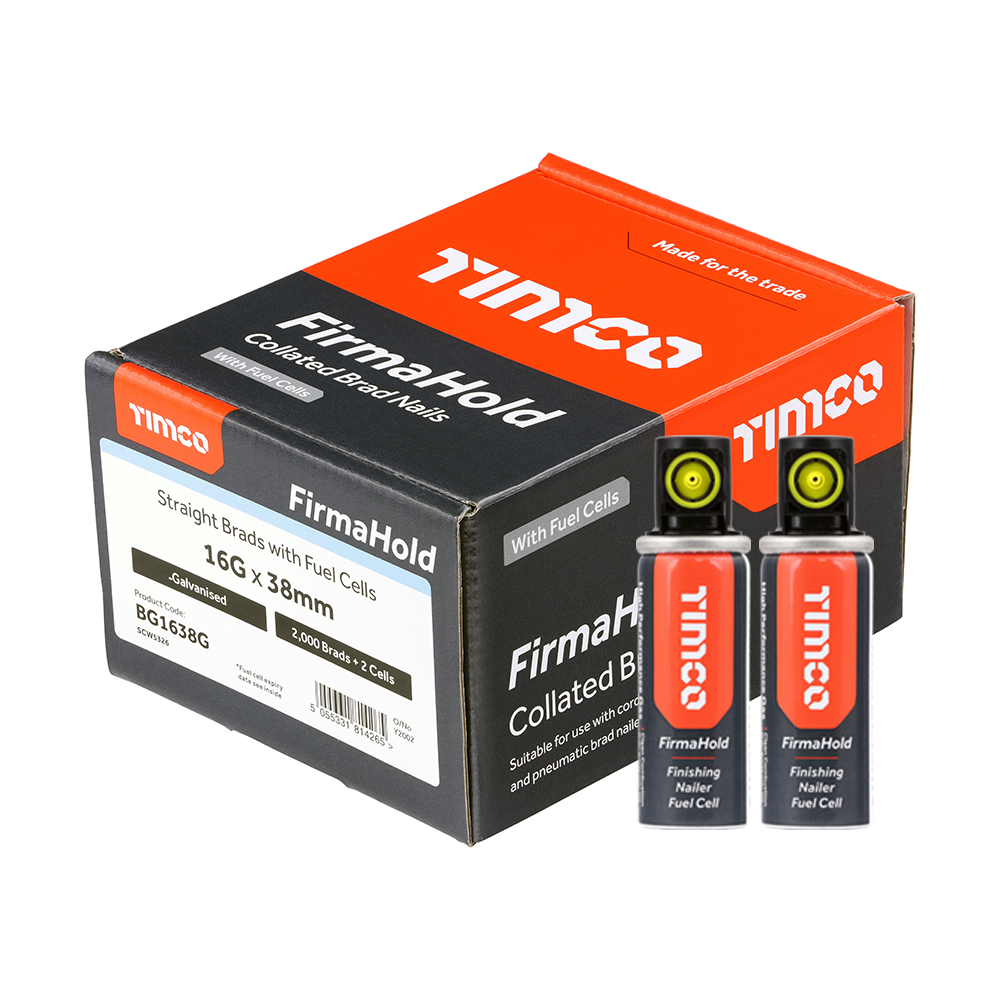
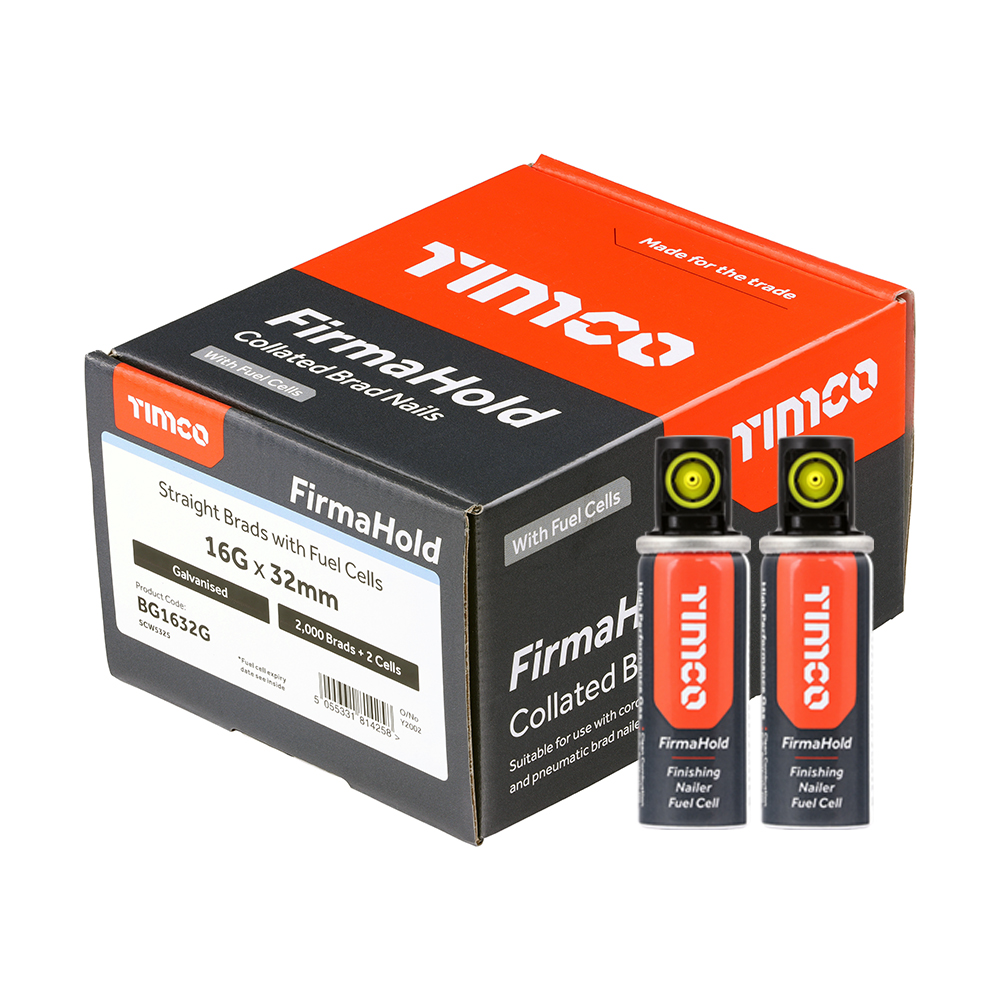
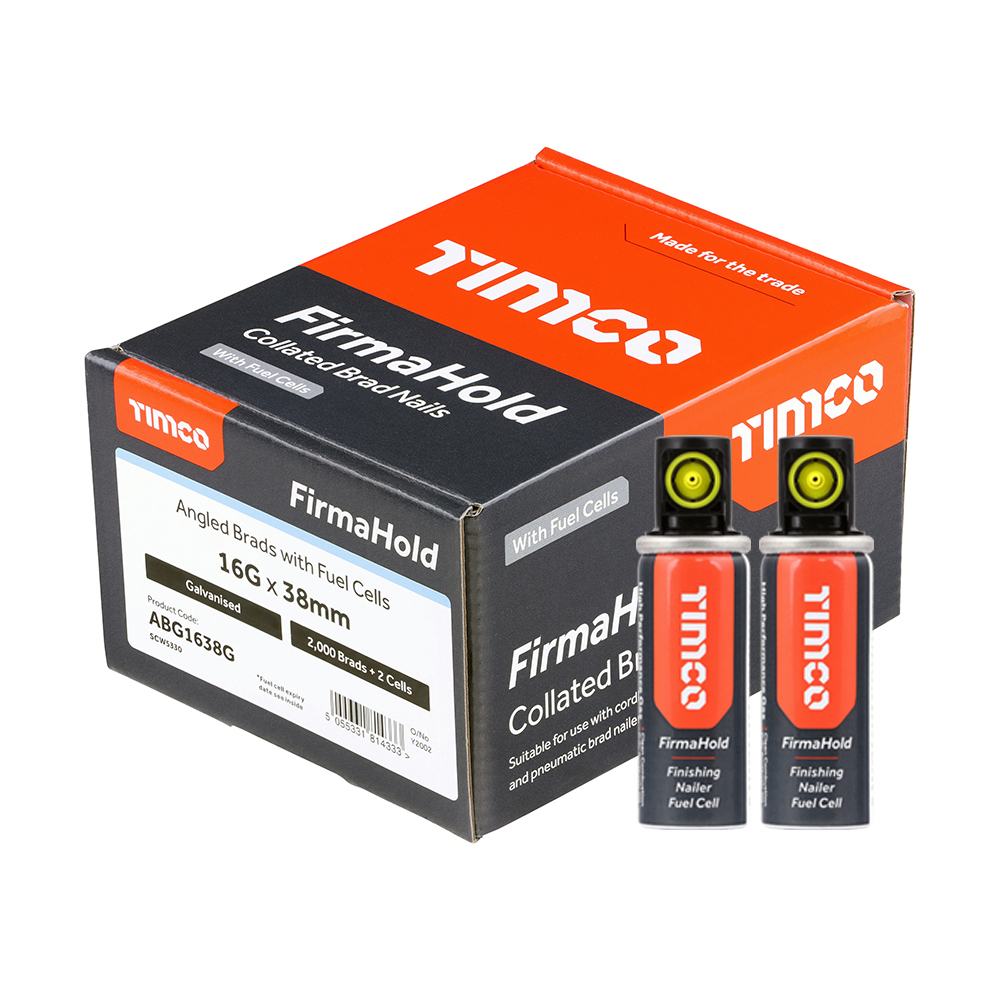
Timco FirmaHold Collated Brad Nails & 2 Fuel Cells - 16g x 38mm - 16 Gauge - Straight - Galvanised
£11.91 ex VAT(£14.29 inc VAT)
16 gauge nail sizes explained
Choosing the correct nail length is important. Nails that are too short may not provide enough grip, while nails that are too long can damage the material or protrude through the back of the fixing surface.
| 16 Gauge Nail Size | Available Type | Typical Applications |
|---|---|---|
| 16g x 19mm | Straight | Light trim and beading |
| 16g x 25mm | Straight | Small mouldings and light trim work |
| 16g x 32mm | Straight & Angled | General second fix carpentry |
| 16g x 38mm | Straight & Angled | Skirting boards and architrave |
| 16g x 45mm | Straight & Angled | Door linings and thicker trim |
| 16g x 50mm | Straight & Angled | Heavier mouldings and timber trim |
| 16g x 64mm | Straight & Angled | Large trim sections and deeper fixing |
Straight vs angled 16 gauge nails
Straight 16 gauge nails
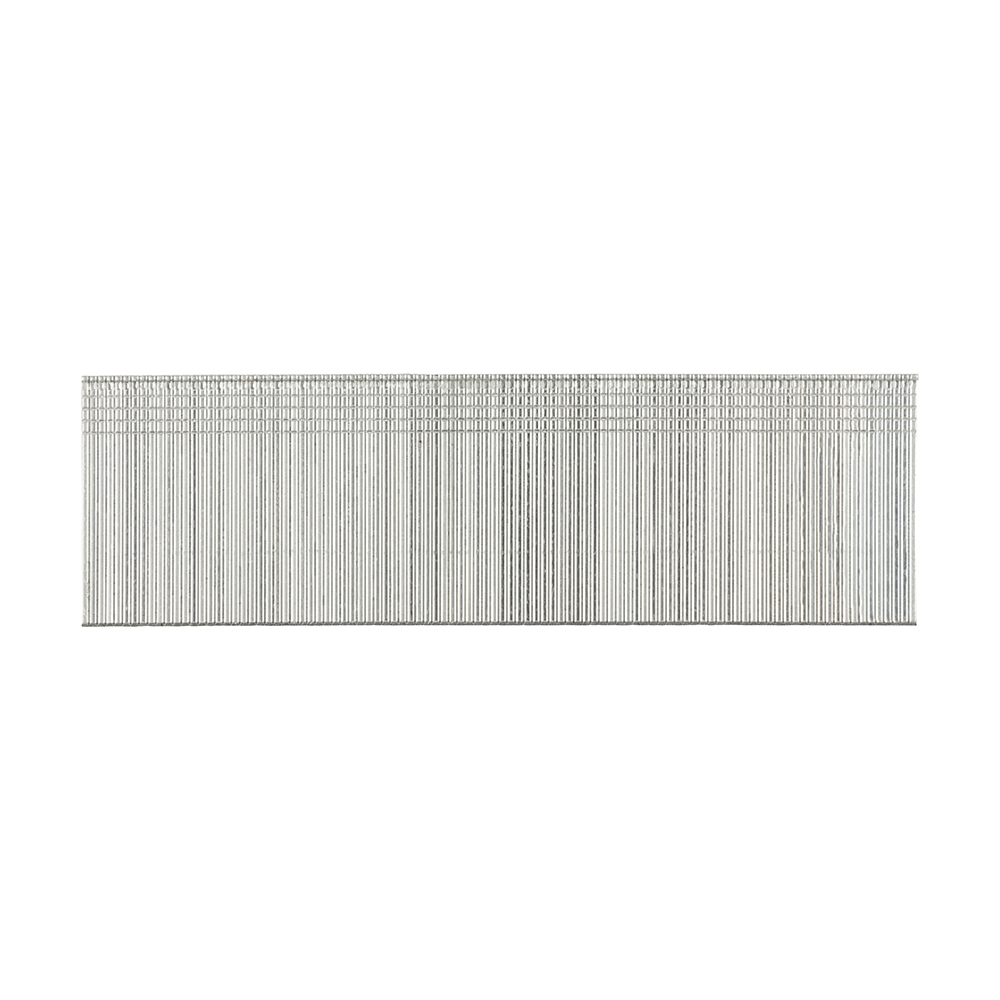
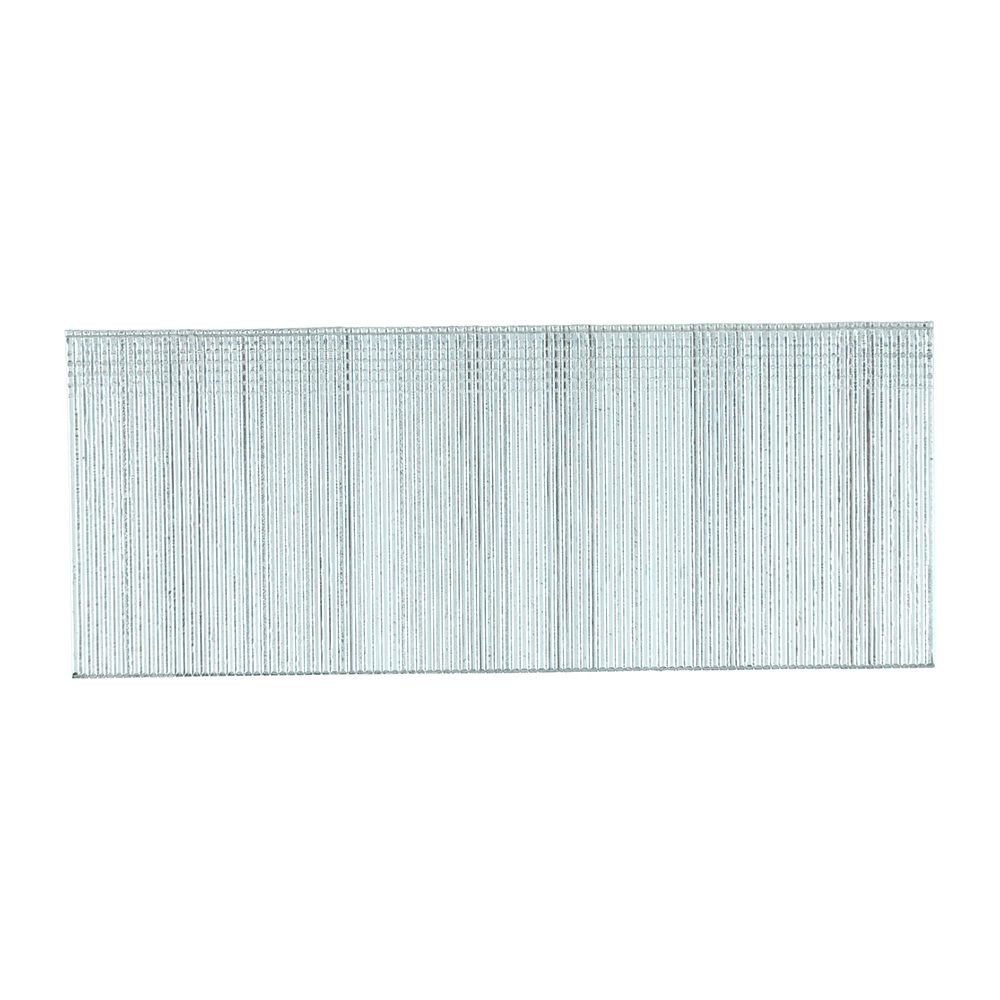
Straight nails are designed for straight magazine nail guns and are commonly used for general second fix applications.
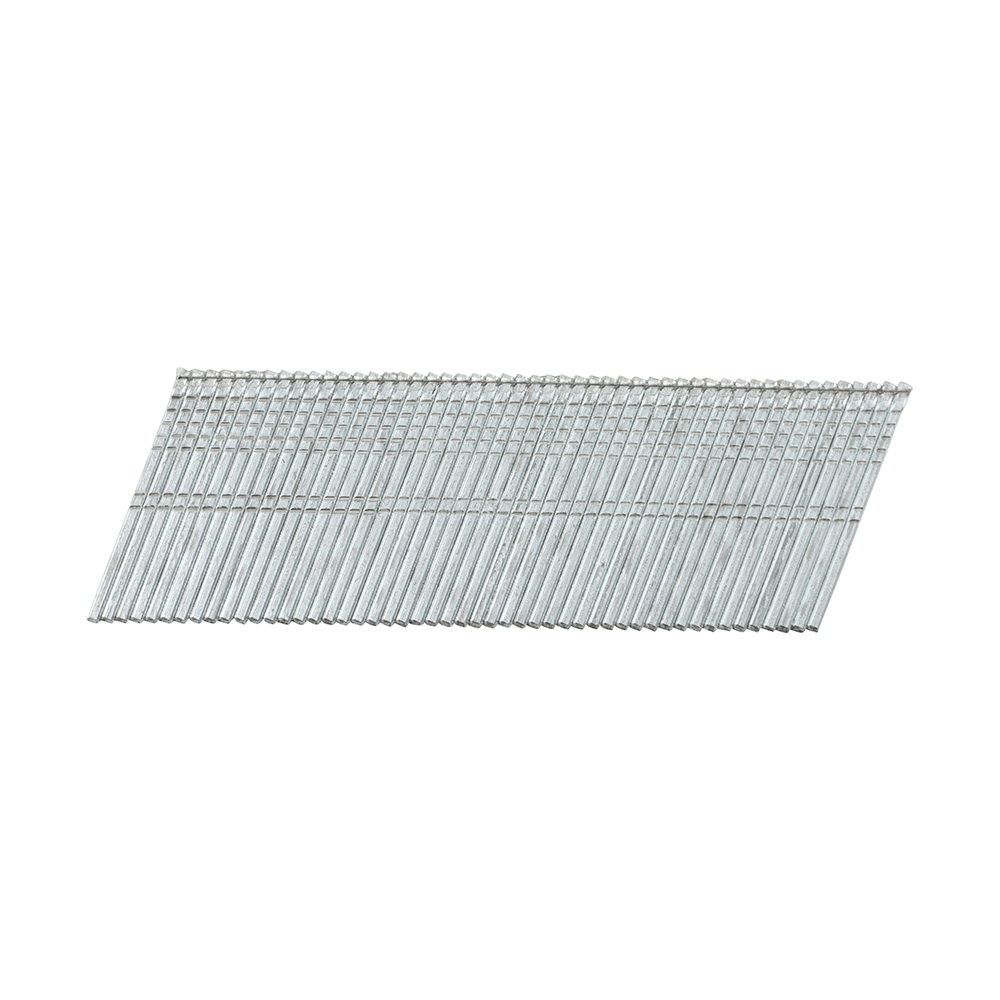
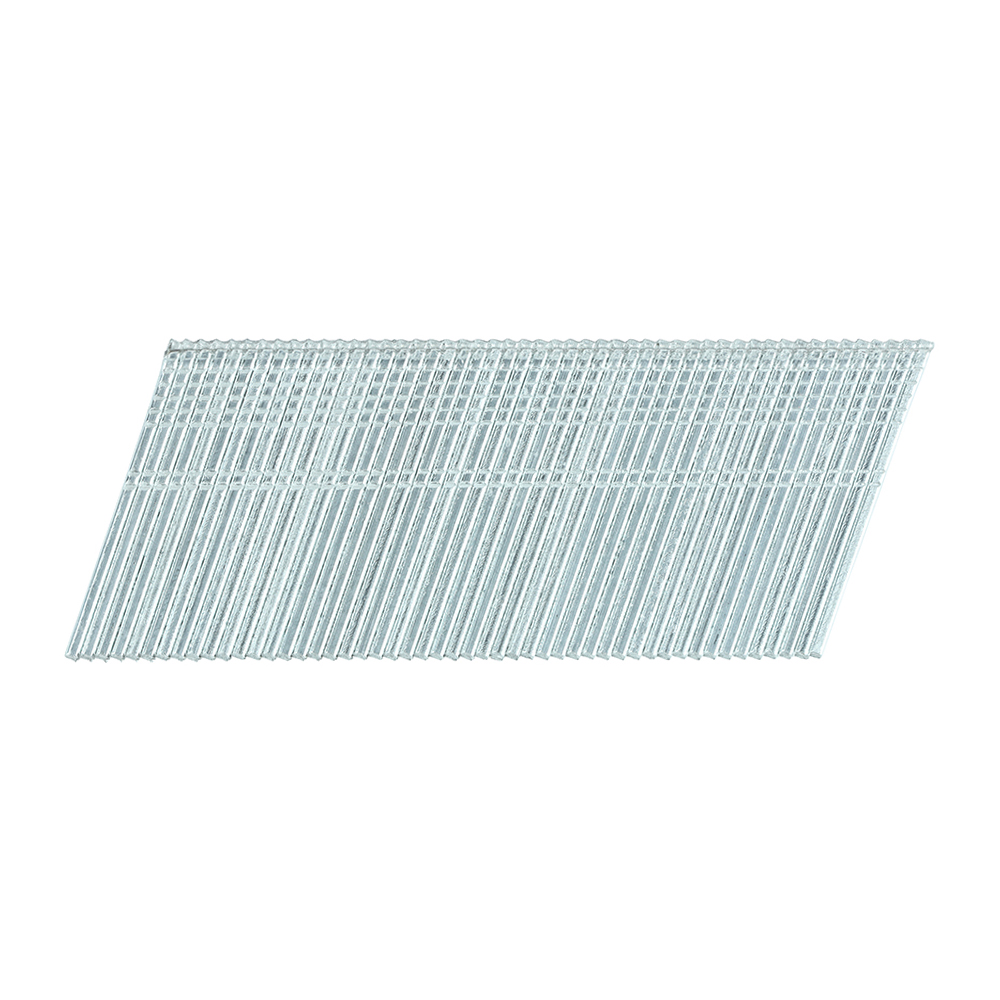
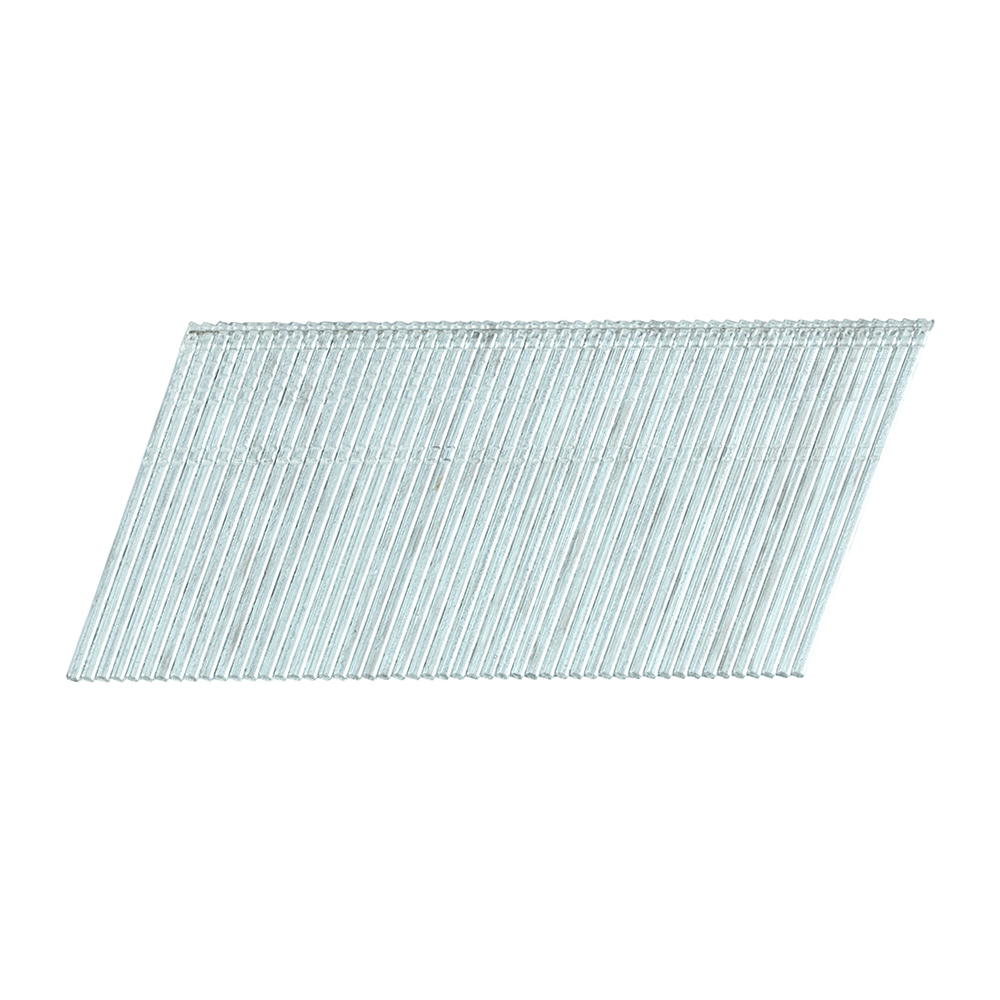
Angled 16 gauge nails
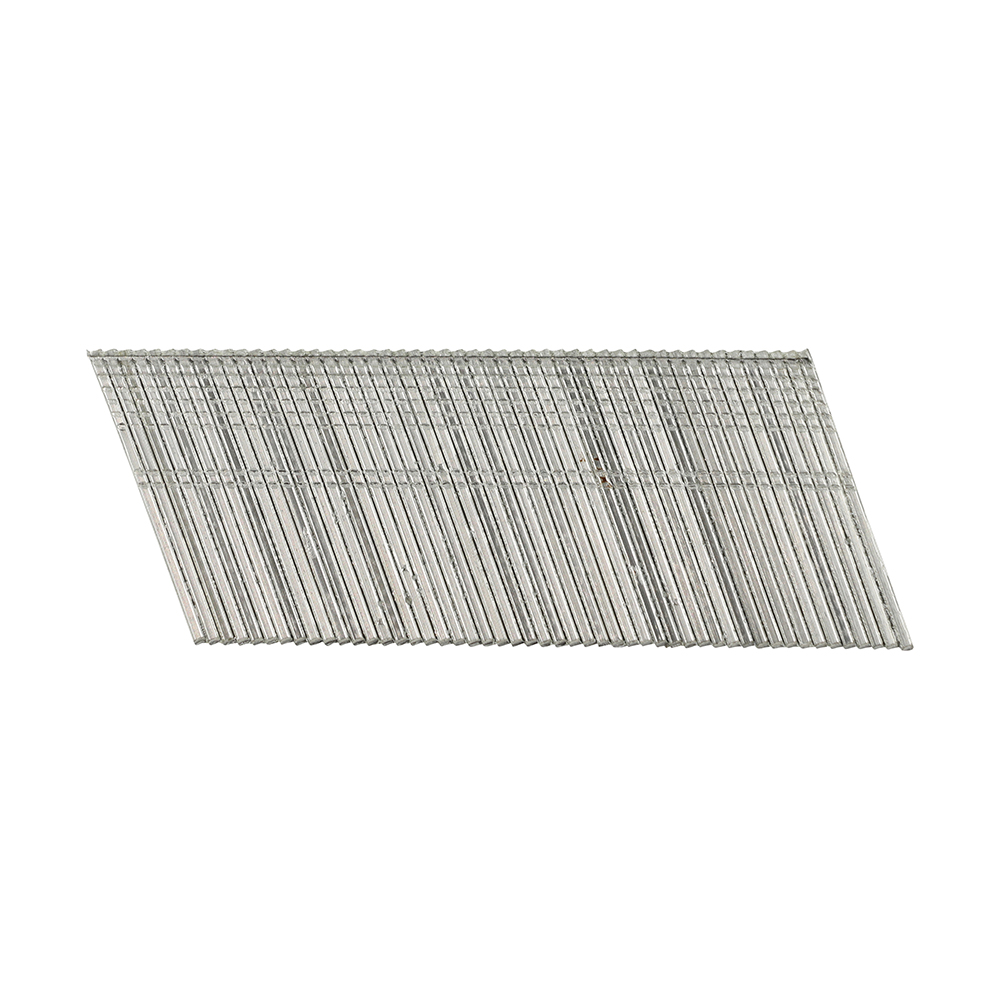
Angled nails are designed for angled nail guns and can provide easier access into corners and tighter spaces. Always check nail gun compatibility before ordering nails, as straight and angled nails are not interchangeable.
| Type | Best For | Key Point |
|---|---|---|
| Straight nails | General second fix work | Used in straight magazine nail guns |
| Angled nails | Corners and awkward access | Used in angled magazine nail guns |
Trade tip: If you regularly work in corners or tight spaces, angled 16 gauge nails and angled nail guns can make installation much easier.
What length 16 gauge nails should you use?
As a general rule, second fix nails should penetrate around 2 to 3 times the thickness of the material being fixed into the substrate.
| Material Thickness | Recommended Nail Length | Typical Application |
|---|---|---|
| 10mm – 12mm | 25mm – 32mm | Beading and light trim |
| 15mm – 18mm | 38mm – 50mm | Skirting boards and architrave |
| 20mm – 25mm | 50mm – 64mm | Door linings and heavier trim |
Trade tip: Longer nails provide greater holding strength, but using nails that are too long can increase the risk of splitting timber or hitting hidden pipes and cables behind the fixing surface.
Galvanised vs stainless finish nails
Galvanised 16 gauge nails
- Suitable for most internal second fix work
- Cost-effective option
- Good corrosion resistance for dry indoor environments
A2 stainless steel nails
- Improved corrosion resistance
- Suitable for external applications
- Ideal for damp conditions
A4 stainless steel nails
- Higher corrosion resistance than A2
- Suitable for coastal and exposed environments
- Ideal for harsher outdoor conditions
Do you need nails with fuel cells?
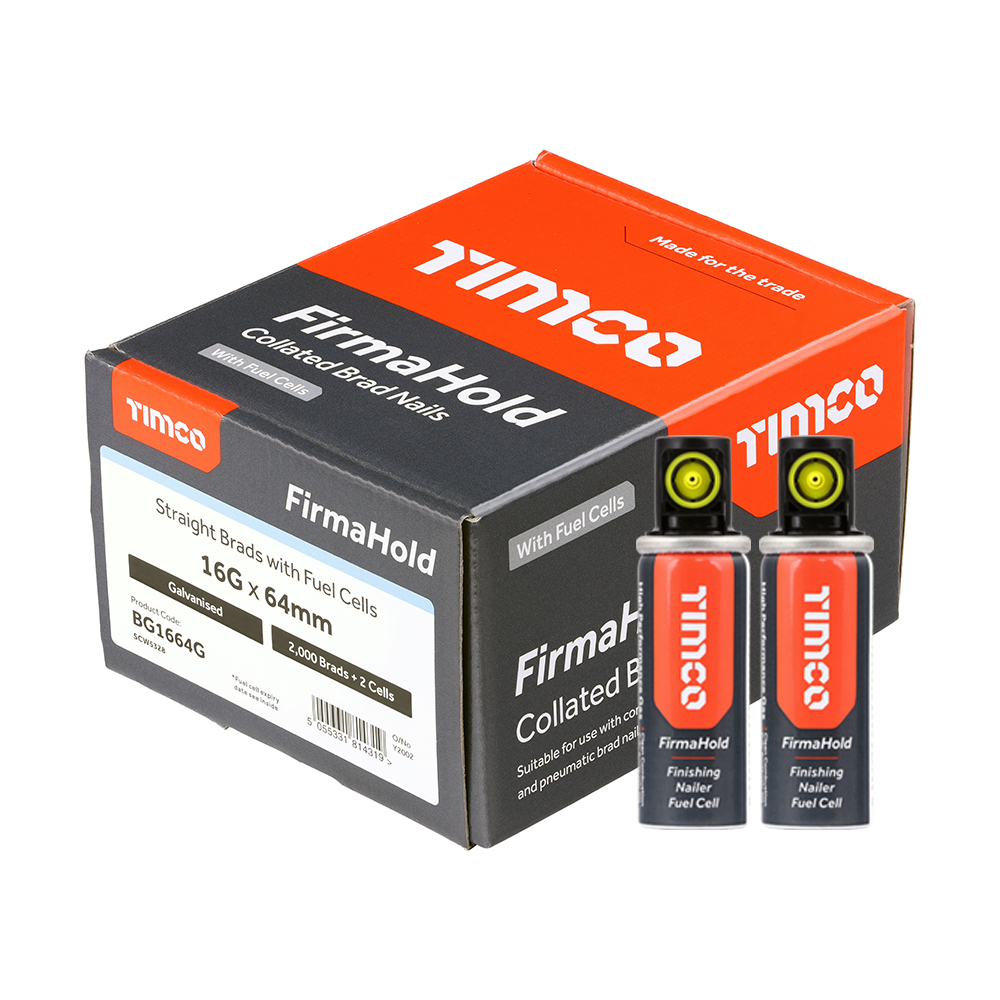
Some second fix nail guns require fuel cells, while others do not. 16 gauge nails are available both as:
- Nails only
- Nails supplied with compatible fuel cells
Fuel cell packs are commonly used with gas nail guns to allow quick installation without compressors or airlines. Before purchasing, always check:
- Your nail gun compatibility
- The required nail angle
- The correct nail length
- Whether fuel cells are required
FirmaHold Second Fix Nail Gun Nails
-
Timco FirmaHold Collated Brad Nails & 2 Fuel Cells - 16g x 64mm - 16 Gauge - Straight - Galvanised
£13.99 ex VAT(£16.79 inc VAT)
-
Timco FirmaHold Collated Brad Nails - 18g x 25mm - 18 Gauge - Straight - Galvanised
£4.99 ex VAT(£5.99 inc VAT)
-
Timco FirmaHold Collated Brad Nails & 2 Fuel Cells - 16g x 32mm - 16 Gauge - Straight - Galvanised
£11.49 ex VAT(£13.79 inc VAT)
-
Timco FirmaHold Collated Brad Nails - 18g x 38mm - 18 Gauge - Straight - A2 Stainless Steel
£25.83 ex VAT(£30.99 inc VAT)
-
Timco FirmaHold Collated Brad Nails - 18g x 50mm - 18 Gauge - Straight - Galvanised
£9.08 ex VAT(£10.89 inc VAT)
-
Timco FirmaHold Collated Brad Nails - 16g x 38mm - 16 Gauge - Angled - A2 Stainless Steel
£21.74 ex VAT(£26.09 inc VAT)
-
Timco FirmaHold Collated Brad Nails & 2 Fuel Cells - 16g x 38mm - 16 Gauge - Angled - Galvanised
£12.83 ex VAT(£15.39 inc VAT)
How to choose the right second fix nails
Check your nail gun type
Always confirm whether your nail gun takes straight or angled nails.
Choose the correct nail length
Select a length suitable for the trim and the substrate being fixed into.
Consider the environment
Use galvanised nails for most indoor work and stainless steel for outdoor or damp conditions.
Decide whether you need fuel cells
Gas nailers often require compatible fuel cells supplied with the nails.
Important: Choosing the wrong nail angle is one of the most common mistakes with second fix nail guns. Straight and angled nails are not compatible with each other.
Common mistakes to avoid
- Using angled nails in straight nail guns
- Using straight nails in angled nail guns
- Choosing nails that are too short
- Using galvanised nails externally
- Overdriving nails into trim surfaces
- Forgetting to check fuel cell compatibility
Shop 16 gauge nails at Fast Fixings Online
We stock a wide range of Timco FirmaHold 16 gauge nails including straight and angled options in galvanised, A2 stainless steel and A4 stainless steel finishes. Options are also available with fuel cells for compatible gas nail guns. Browse our full range of second fix nail gun nails for fast UK delivery.
FAQs
What are 16 gauge nails used for?
16 gauge nails are commonly used for second fix carpentry including skirting boards, architrave, trim, mouldings and door linings.
Are 16 gauge nails suitable for second fix nail guns?
Yes, 16 gauge nails are one of the most popular choices for second fix nail guns because they provide a strong hold with a clean finish.
What is the difference between straight and angled 16 gauge nails?
Straight nails fit straight magazine nail guns, while angled nails are designed for angled nail guns and improved access into corners and tighter spaces.
Are 16 gauge nails stronger than 18 gauge nails?
Yes, 16 gauge nails are thicker and generally provide greater holding strength than 18 gauge brad nails.
Can you use 16 gauge nails outside?
Yes, but stainless steel nails are recommended for external or damp environments where additional corrosion resistance is needed.
What length 16 gauge nails should I use for skirting boards?
Common sizes for skirting boards are 38mm, 45mm and 50mm depending on the thickness of the material and the fixing surface.
Do second fix nail guns need fuel cells?
Some gas-powered second fix nail guns require compatible fuel cells, while pneumatic and battery nailers may not.
Can angled nails be used in straight nail guns?
No, angled and straight nails are not interchangeable. Always check nail gun compatibility before purchasing nails.
What finish should I choose for 16 gauge nails?
Galvanised nails are suitable for most internal applications, while A2 or A4 stainless steel nails are better for external or damp environments.
What are collated brad nails?
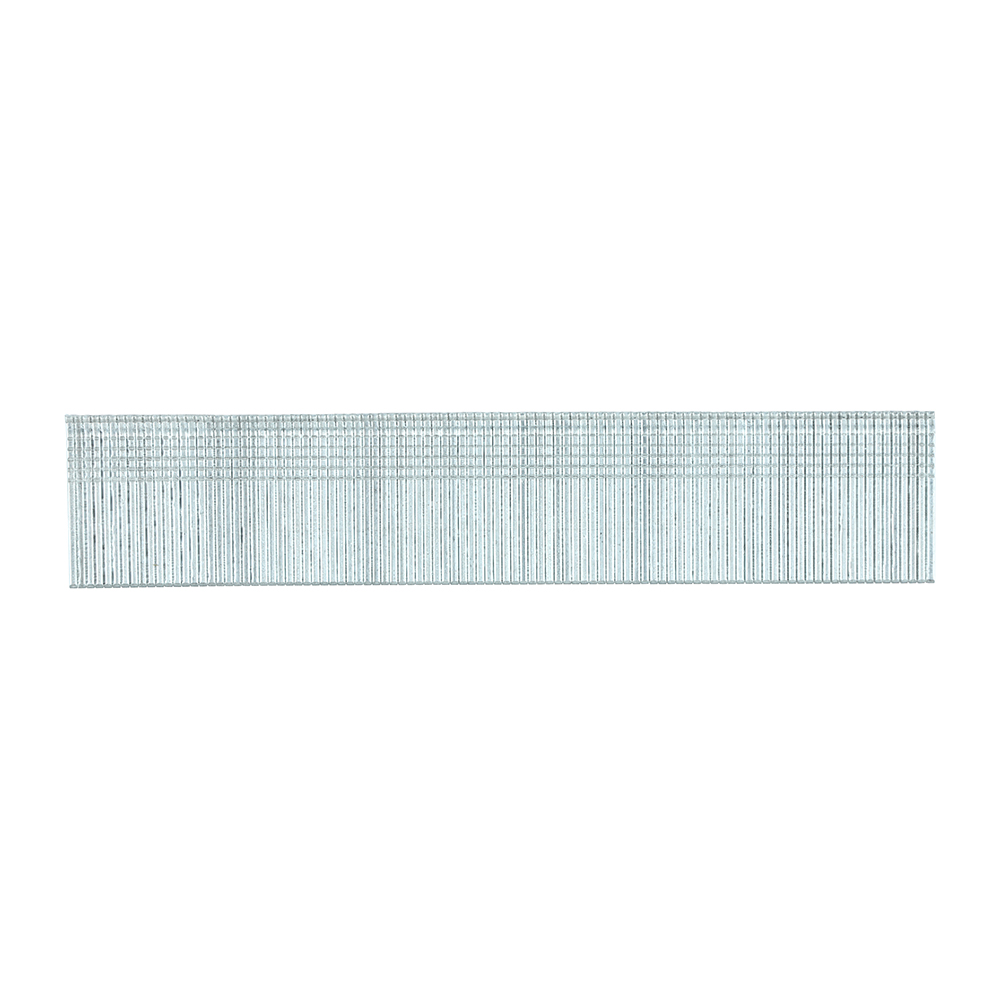
Collated brad nails are joined together in strips for fast loading into compatible nail guns, making installation quicker and more efficient.
Angled Brads
-
Timco FirmaHold Collated Brad Nails - 16g x 32mm - 16 Gauge - Angled - Galvanised
£4.08 ex VAT(£4.89 inc VAT)
-
Timco FirmaHold Collated Brad Nails - 16g x 38mm - 16 Gauge - Angled - Galvanised
£4.58 ex VAT(£5.49 inc VAT)
-
Timco FirmaHold Collated Brad Nails - 16g x 45mm - 16 Gauge - Angled - Galvanised
£4.99 ex VAT(£5.99 inc VAT)
-
Timco FirmaHold Collated Brad Nails - 16g x 50mm - 16 Gauge - Angled - Galvanised
£5.58 ex VAT(£6.69 inc VAT)
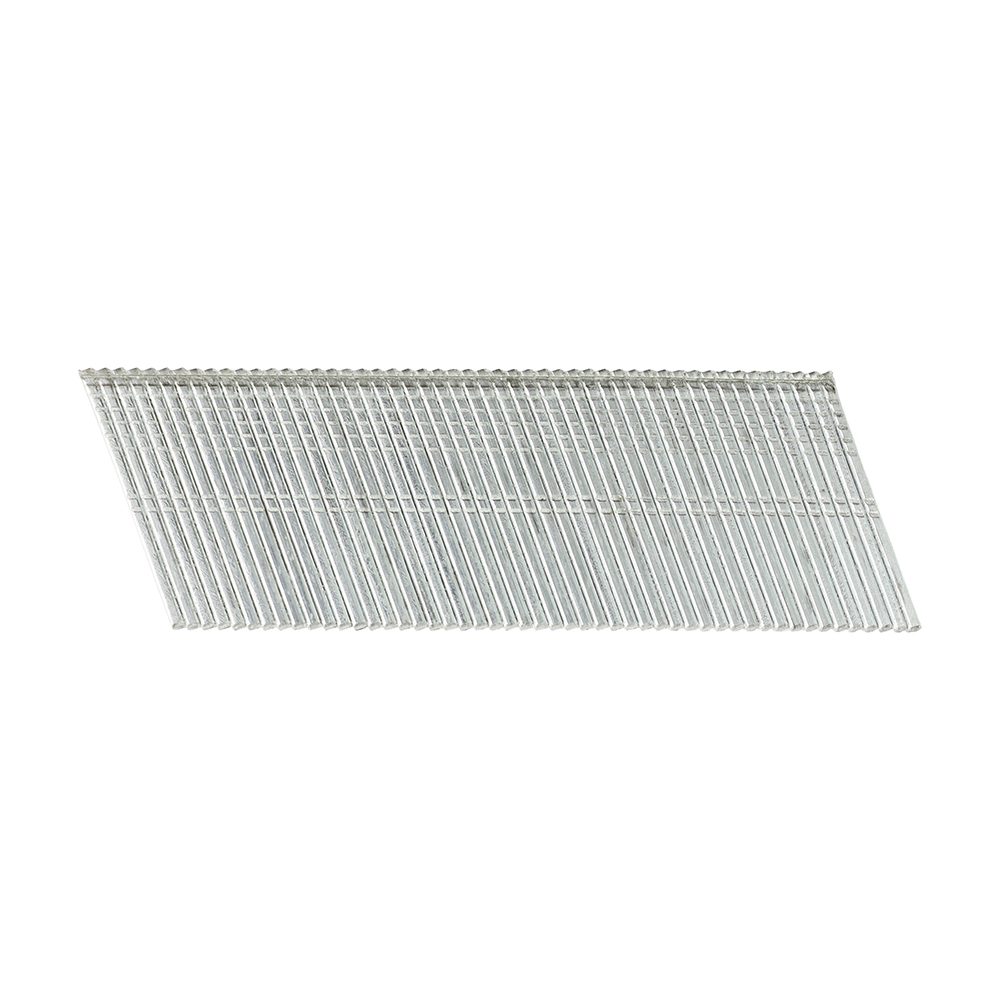
Straight Brads
-
Timco FirmaHold Collated Brad Nails - 16g x 19mm - 16 Gauge - Straight - Galvanised
£2.49 ex VAT(£2.99 inc VAT)
-
Timco FirmaHold Collated Brad Nails - 16g x 25mm - 16 Gauge - Straight - Galvanised
£2.99 ex VAT(£3.59 inc VAT)
-
Timco FirmaHold Collated Brad Nails - 16g x 32mm - 16 Gauge - Straight - Galvanised
£3.49 ex VAT(£4.19 inc VAT)
-
Timco FirmaHold Collated Brad Nails - 16g x 38mm - 16 Gauge - Straight - Galvanised
£3.83 ex VAT(£4.59 inc VAT)