
Wood Screw Sizes Explained: How to Choose the Right Length & Diameter
On July 26, 2026
Comments Off on Wood Screw Sizes Explained: How to Choose the Right Length & Diameter
Introduction
Whether you're building a deck, fitting kitchen units, putting up fencing or tackling general DIY, choosing the correct wood screw size is just as important as selecting the right type of screw. A screw that's too short may not provide enough holding power, while one that's too long or too thick could split the timber or damage the material you're fixing.
Understanding wood screw measurements doesn't have to be complicated. Once you know what the numbers mean, it's much easier to choose the right screw for the job, whether you're working with softwood, hardwood, sheet materials or structural timber.
From understanding what a size such as 5.0 × 80mm means to selecting the correct diameter and length for different applications, this guide explains everything you need to know. We'll also cover how screw length is measured, common wood screw sizes, the difference between diameter and length, and the most common sizing mistakes to avoid.
Not sure which type of screw you need? Our Types of Screws Explained guide covers everything from screw heads and recesses to thread designs and point types, helping you choose the right screw for your application. Once you've identified the correct screw type, this guide will show you how to choose the right wood screw size.
In This Guide
1
What Do Wood Screw Measurements Mean?
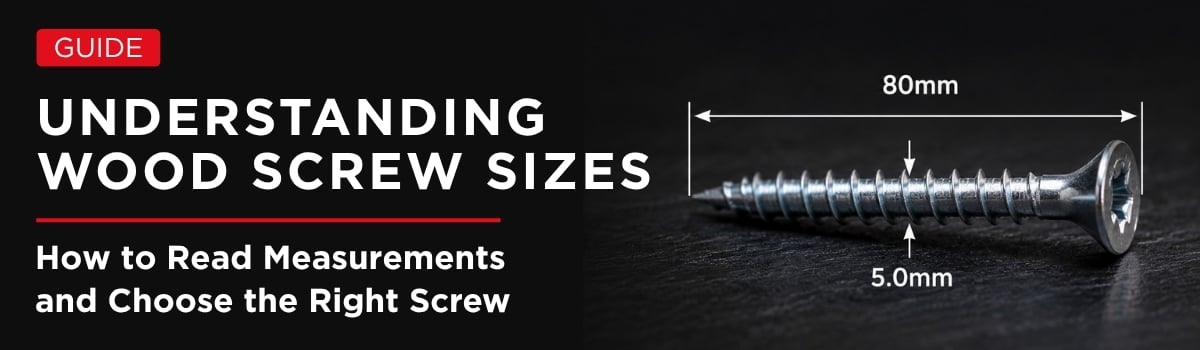
If you’ve ever picked up a box of wood screws and seen a size such as 5.0 × 80mm, you may have wondered what those numbers actually mean. Fortunately, wood screw measurements are straightforward once you understand what each number represents.
Every wood screw size tells you two important things: the diameter of the screw and its length. Together, these measurements determine how much holding power the screw provides and whether it’s suitable for the material you’re fixing.
A wood screw marked 5.0 × 80mm tells you two things: the diameter of the screw and its overall length.
5.0mm
Diameter
The first number is the diameter (thickness) of the screw. A larger diameter generally provides greater holding power and is better suited to heavier-duty applications.
80mm
Length
The second number is the overall length of the screw. Choosing the correct length ensures the screw penetrates far enough into the second piece of timber to create a strong, secure fixing.
Choosing the correct combination of diameter and length helps create a stronger fixing, improves holding power and reduces the risk of splitting timber or using a screw that’s too short for the job. In the following sections, we’ll explain each measurement in more detail and show you how to choose the right size for different applications.
2
How Screw Length Is Measured
Screw length is not always measured from the same point. The correct method depends on the shape of the screw head and whether the head is designed to sit flush with the surface or remain above it.
This is a common source of confusion when choosing or replacing screws. Measuring from the wrong point could result in ordering a screw that is shorter or longer than expected, so it is important to check the head style first.
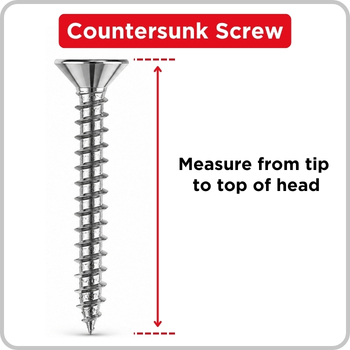
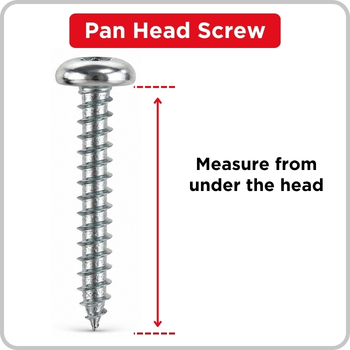
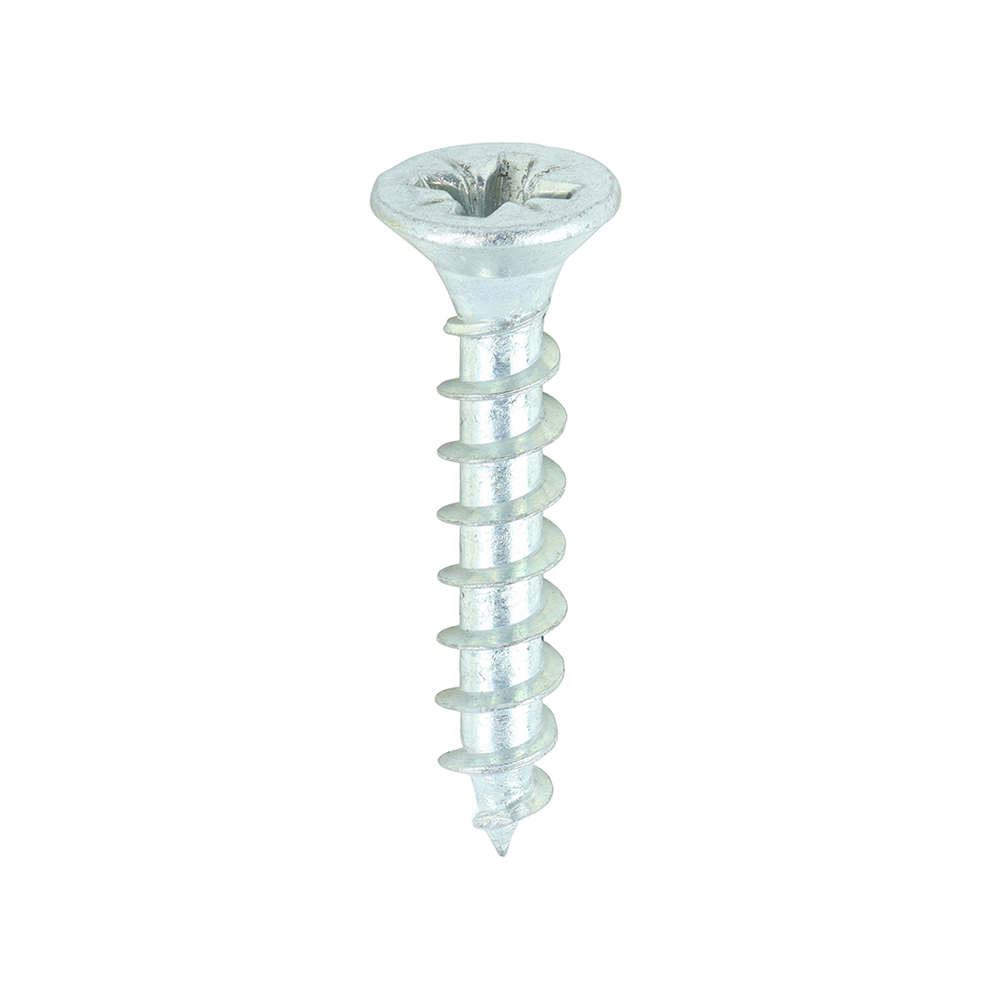
Countersunk screws include the head in the measurement, while pan head screws are measured from beneath the head.
Quick Tip
If the screw head sits flush with or below the surface, measure to the top of the head. If the head remains proud of the surface, measure from the underside of the head.
3
Understanding Screw Diameter
The diameter is the first number shown in a metric screw size. For example, in 5.0 × 80mm, the screw has a diameter of 5.0mm.
Diameter refers to the thickness of the screw measured across the outside of the threads. It affects the screw's strength, holding power and suitability for different materials. In general, thicker screws provide greater strength, but they also remove more material and may increase the risk of splitting timber.
| Screw Diameter | Typical Applications | Commonly Used For |
|---|---|---|
| 3.5mm | Light-duty fixings where a smaller screw is required. | Hinges, cabinetry, MDF, thin timber and lightweight joinery. |
| 4.0mm | A versatile size for many everyday timber-fixing tasks. | General DIY, shelving, timber battens, softwood and furniture assembly. |
| 4.5mm | Medium-duty work requiring additional strength and holding power. | Joinery, framing, thicker boards and general timber construction. |
| 5.0mm | Heavier timber fixing where a stronger connection is needed. | Decking, fencing, CLS timber, structural joinery and outdoor projects. |
| 6.0mm | Heavy-duty fixing for substantial timber and demanding applications. | Sleepers, landscaping, heavy beams, structural timber and large outdoor projects. |
These examples are a general guide rather than a fixed rule. The correct diameter will also depend on the screw type, timber species, load requirements and whether the fixing is being used indoors or outdoors.
Common wood screw diameters range from 3.5mm for lighter fixings to 6.0mm for heavier-duty timber applications.
Quick Tip
A thicker screw isn't always the best choice. Select the smallest diameter that provides enough strength for the job, as oversized screws can increase the risk of splitting the timber. When working close to an edge or in hardwood, drilling a suitable pilot hole can help prevent damage.
4
Choosing the Right Screw Length
Choosing the correct screw length is essential for creating a secure fixing. The screw must pass through the first material and penetrate far enough into the supporting timber to achieve a reliable hold, without protruding through the other side.
The right length will depend on the thickness of the materials, the load being supported and the type of joint being created. The following sizes provide a useful starting point for common woodworking and outdoor projects.
| Material or Application | Typical Recommended Length | Things to Consider |
|---|---|---|
| 18mm MDF or sheet material | 30–35mm | Suitable for many light-duty furniture and cabinet fixings. Take care near edges, as MDF can split or swell. |
| 25mm timber | 40–50mm | Commonly used for general joinery, shelving, battens and everyday timber connections. |
| 38mm CLS timber | 60–70mm | Provides deeper penetration for framing and timber-to-timber connections. |
| Deck boards | 50–65mm | Choose a corrosion-resistant decking screw and allow enough length to secure the board firmly to the joist. |
| Fence rails and outdoor timber | 70–100mm | Longer screws may be required for thicker rails, posts and heavy-duty landscaping connections. |
These recommendations assume the screw is passing through one material and fixing securely into a second piece of timber. Always check the combined material thickness before installation and make sure the screw will not break through a visible or finished surface.
Quick Tip
Don’t choose a screw based on length alone. The correct diameter, head style, thread design, material and corrosion resistance are just as important. For structural or safety-critical applications, always follow the screw manufacturer’s installation guidance.
5
Common Wood Screw Sizes and Uses
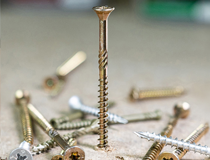
Wood screws are available in a wide range of diameters and lengths, from small cabinet fixings through to heavy-duty structural timber screws. While many sizes overlap in their applications, certain combinations of diameter and length are particularly popular for specific jobs.
The table below highlights some of the most commonly used metric wood screw sizes and where they’re typically used. Remember, the first number is the screw diameter, while the second number is the overall screw length.
| Screw Size | Typical Uses | Why It’s Used |
|---|---|---|
| 3.5 × 20mm | Hinges, brackets and small fittings | Ideal where there is limited material depth. |
| 3.5 × 30mm | MDF, cabinetry and lightweight joinery | Small diameter with additional penetration for sheet materials. |
| 4.0 × 40mm | General timber fixing, battens and shelving | A versatile everyday woodworking screw. |
| 4.5 × 50mm | Joinery and general construction | Excellent all-round size for timber connections. |
| 5.0 × 80mm | Timber framing, fencing and heavier joinery | Provides greater holding power for thicker timber sections. |
| 5.0 × 120mm | Heavy timber joints and construction timber | Offers deeper penetration where extra fixing depth is required. |
| 6.0 × 150mm | Heavy timber construction and framing | Suitable for larger timber sections that require increased holding strength. |
| 6.0 × 180mm | Large timber assemblies | Designed for joining multiple thick timber sections together. |
| 6.0 × 200mm | Heavy construction timber | Provides deep penetration into substantial timber sections. |
| 6.0 × 220mm | Structural timber projects | Ideal where longer fixings are needed to secure thick timber. |
| 6.0 × 240mm | Heavy timber construction | One of the longest standard woodscrew sizes for substantial timber connections. |
| 6.7 × 250mm | Structural timber and large timber assemblies | Heavy-duty timber screw designed for demanding structural applications. |
| 6.7 × 300mm | Large structural timber connections | Provides maximum penetration where very thick timber sections need to be secured. |
| 8.0 × 300mm Clamp-Fix | Structural timber, oak framing and heavy timber construction | The Clamp-Fix thread design pulls large timber sections tightly together while delivering exceptional holding strength. |
These examples provide a general guide to common screw sizes. The correct screw should always be selected based on the material thickness, timber type, load requirements and the manufacturer’s recommendations.
Quick Tip
Two screws of the same length can perform very differently depending on their diameter, thread design and intended application. Always choose the complete screw specification rather than relying on length alone.
6
Diameter vs Length – What's the Difference?
One of the most common misconceptions is that a larger screw is simply a longer one. In reality, screw diameter and screw length affect the performance of a fixing in different ways.
Take a 4.5 × 70mm screw as an example. Compared with a 3.5 × 70mm screw, it has a larger diameter, which generally provides greater strength and pull-out resistance. Compared with a 4.5 × 50mm screw, its additional length allows it to penetrate more deeply into the supporting timber.
Diameter affects the screw's thickness and strength, while length determines how deeply it can penetrate into the supporting timber.
Same Length, Larger Diameter
3.5 × 70mm → 4.5 × 70mm
The screw becomes thicker, increasing its overall strength and making it more resistant to bending or snapping under load.
Greater Holding Power
Larger Diameter = More Thread Engagement
A thicker screw has more thread surface engaging with the timber, which can increase its pull-out resistance and create a stronger fixing.
Same Diameter, Greater Length
4.5 × 50mm → 4.5 × 70mm
Increasing the length allows the screw to penetrate more deeply into the second piece of timber, providing a larger fixing area and a more secure joint.
Trade Tip
A longer screw is not automatically the strongest option. For some timber fixings, increasing the diameter may improve strength more than simply increasing the length. The most reliable fixing uses the correct combination of diameter, length, thread design and material for the job.

7
Choosing the Right Wood Screw
Choosing the right wood screw isn't just about selecting the correct size. Different screw designs are intended for different applications, from everyday timber fixing to decking, structural work and decorative installations.
Use the guide below to quickly identify the most suitable wood screw category for your project. Once you've chosen the right range, you can then select the appropriate diameter and length using the advice earlier in this guide.
Need help understanding the differences between wood screws, decking screws, premium timber screws and other fixing types? Our Types of Screws Explained guide covers the purpose and features of each screw design.
| Your Project | Recommended Range | Best For |
|---|---|---|
| General timber projects, DIY & joinery | Wood Screws | Reliable everyday woodscrews for general timber-to-timber fixing. |
| Working with timber, MDF, chipboard or plastics | Multi-Purpose Wood Screws | Versatile screws designed for a wide range of fixing applications. |
| Building decking, fencing or outdoor timber projects | Decking & Timber Screws | Exterior-grade screws designed to resist corrosion and reduce timber splitting. |
| Structural timber or demanding trade work | Premium Wood Screws | Advanced thread designs for faster driving and excellent holding power. |
| Visible fixtures, mirrors and decorative fittings | Mirror & Decorative Screws | Decorative finishes that complement visible fixtures and fittings. |
| Using an autofeed screwdriver on repetitive jobs | Collated Wood Screws | Supplied in collated strips for fast, consistent installation. |
| Stocking the workshop or van | Sets, Packs & Tubs | Convenient packs containing popular screw sizes for everyday jobs. |
Quick Tip
Choosing the correct wood screw type is just as important as selecting the right diameter and length. Matching the screw to your project will make installation easier and help create a stronger, longer-lasting fixing.
8
Common Wood Screw Sizing Mistakes to Avoid
Choosing the right wood screw isn’t just about selecting the correct length. The correct diameter, length and screw type all play an important role in creating a strong, reliable fixing while helping to prevent timber damage during installation.
Avoid these common mistakes to achieve a more secure, longer-lasting fixing and get the best performance from your wood screws.
| Common Mistake | Why It’s a Problem | Better Choice |
|---|---|---|
| Using screws that are too short | The screw won’t penetrate deeply enough into the supporting timber, reducing holding strength. | Choose a screw that provides adequate penetration into the second piece of timber. |
| Choosing a screw that’s too thick | Oversized screws can split timber, particularly near edges or when fixing hardwood. | Select the smallest diameter that provides enough strength for the job. |
| Measuring from the wrong part of the screw head | Using the wrong measuring point can result in choosing an incorrect screw length. | Measure countersunk screws to the top of the head and raised-head screws from the underside. |
| Using indoor screws outdoors | Standard zinc-plated screws can corrode when exposed to rain and moisture. | Choose exterior-coated or stainless steel screws for outdoor projects. |
| Forgetting pilot holes in hardwood | Hardwoods are more likely to split and require greater driving force during installation. | Drill a correctly sized pilot hole to reduce splitting and make driving the screw easier. |
Quick Tip
Most wood screw problems aren’t caused by poor-quality screws—they’re caused by selecting the wrong diameter, length or screw type. Taking a few moments to choose the correct specification will help create a stronger, more reliable fixing.
9
Frequently Asked Questions
Still have a question? Here are the answers to some of the most common questions about wood screw sizes, measurements and choosing the correct screw for your project.
Click a question below to reveal the answer.
What does 4.5 × 70mm mean on a wood screw?
The first number is the screw’s diameter and the second is its length. A 4.5 × 70mm screw therefore has a diameter of 4.5mm and an overall measured length of 70mm.
How is the length of a wood screw measured?
Countersunk screws are generally measured from the top of the head to the tip because the head sits flush with the material. Screws with heads that remain above the surface, such as pan head screws, are measured from the underside of the head to the tip.
What diameter wood screw should I use?
The correct diameter depends on the materials being joined and the strength required. Smaller diameters suit lighter work, while thicker screws can provide greater strength and pull-out resistance. However, an oversized screw may split the timber.
How long should a wood screw be?
The screw should pass through the first material and penetrate sufficiently into the supporting timber without protruding through the other side. The exact length will depend on the thickness of both materials and the demands of the fixing.
| What type of screw should I use for decking? | Use purpose-made decking screws. They are designed for timber decking and feature corrosion-resistant finishes and thread designs that minimise splitting. |
| Should I use stainless steel or coated screws? | High-performance coated decking screws are suitable for most outdoor decking projects. For coastal areas, cedar, oak or other tannin-rich timbers, A2 or A4 stainless steel screws are the better choice. |
| Do I need to drill pilot holes? | Many modern decking screws with Type 17 points or slash points don't require pilot holes in softwood. However, pilot holes are recommended when working with hardwoods or fixing close to the edge of a board. |
| What length decking screw should I use? | As a general rule, choose a screw that is around 2½ times the thickness of the decking board. This provides sufficient penetration into the supporting joist for a strong, secure fixing. |
Fast Fixings Tip
For the longest-lasting decking installation, always use screws with the correct corrosion resistance for the environment. Stainless steel screws are the best choice for coastal locations and naturally acidic timbers, while high-performance coated decking screws are ideal for most treated softwood decks.
Is a thicker screw stronger than a longer screw?
Diameter and length affect a screw in different ways. A larger diameter generally increases strength and pull-out resistance, while additional length increases penetration into the supporting timber. The best fixing uses the correct combination of both.
Do longer screws provide a stronger fixing?
Not automatically. A longer screw may provide deeper penetration, but strength also depends on its diameter, thread design, material and the timber being fixed. A longer screw that is too thin may not be suitable for a heavy-duty application.
Should I drill a pilot hole for wood screws?
A pilot hole can help prevent splitting, reduce driving resistance and keep the screw aligned. It is particularly useful in hardwood, near the end or edge of timber, and when using larger-diameter screws.
Can I use standard wood screws outdoors?
Only when the screw has a finish suitable for exterior exposure. Standard bright or zinc-plated screws may corrode outdoors. Exterior-coated or stainless steel screws are generally better suited to damp, exposed or coastal environments.
What size wood screw should I use for 18mm MDF?
A screw of approximately 30–35mm may suit many applications involving 18mm MDF, although the correct size depends on the joint, supporting material and position of the fixing. A suitable pilot hole can also help prevent the MDF from splitting or swelling.
What is the difference between wood screws and timber screws?
Wood screws are commonly used for general joinery and timber-to-timber fixing. Timber screws are often longer, thicker and designed for heavier construction or structural timber applications. Always check the manufacturer’s stated application and load guidance.
Can a wood screw be too thick for the timber?
Yes. A screw with too large a diameter can displace excessive material and cause the timber to split, particularly close to an edge or in dense hardwood. Use the smallest diameter that provides sufficient strength for the application.
What are the most common wood screw sizes?
Common sizes include smaller screws such as 3.5 × 20mm for light joinery, medium sizes such as 4.0 × 40mm and 5.0 × 80mm for general timber work, and longer screws from 6.0 × 150mm upwards for larger timber assemblies. The right size depends on the individual project.
Wood Screws
-
Timco Metal Tapping Screws - PZ - Countersunk - Self-Tapping - A2 Stainless Steel - 4.8 x 50 £11.66 ex VAT(£13.99 inc VAT)
-
Timco C2 Clamp-Fix Timber Clamping Screws - TX - 4.0mm x 40mm - Tub of 1200 £17.66 ex VAT(£21.19 inc VAT)
-
Timco C2 Exterior Strong-Fix Wood Screws - Pozi - 4.0mm x 30mm - Box of 200 £3.74 ex VAT(£4.49 inc VAT)
-
TIMCO Solo Wood Screws - 5.0mm x 60mm - Tub of 400 £8.94 ex VAT(£10.73 inc VAT)
-
Timco Metal Tapping Screws - PZ - Pan - Self-Tapping - A2 Stainless Steel - 2.9 x 9.5 £1.66 ex VAT(£1.99 inc VAT)
-
Timco Bi-Metal Heavy Section Steel Screws – Self-Drilling – Hex – 5.5mm x 55mm - Box of 100 £38.58 ex VAT(£46.29 inc VAT)
-
Timco Classic Multi-Purpose Screws - Countersunk - 3.0mm x 30mm - Box of 200 £1.41 ex VAT(£1.69 inc VAT)
Ready to Choose the Right Wood Screw?
Browse our complete range of wood screws, decking screws and premium timber fixings for every project.