
 Screws

 Nails
 Fasteners & Fixings
 Adhesives & Building Chemicals

 Powertool Accessories

 Fence & Gate Hardware
 Building Supplies

 Security & Ironmongery
 Site and Access




 Hand Tools

 Painting & Decorating

 Workwear, PPE & Safety




Corner Bead vs Stop Bead: What’s the Difference & When Should You Use Each?

On October 6, 2026
Comments Off on Corner Bead vs Stop Bead: What’s the Difference & When Should You Use Each?
Introduction
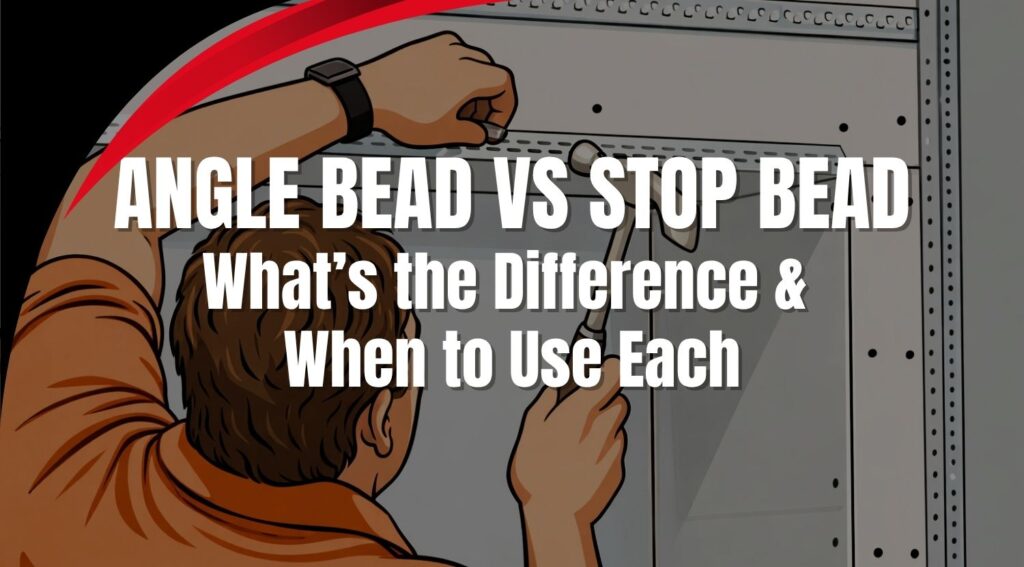
Corner beads and plaster stop beads are both used to create clean, accurate plaster finishes, but they perform very different jobs. A corner bead is used to form and reinforce an external corner, while a plaster stop bead creates a defined edge where the plaster finish needs to end.
Choosing between them therefore depends primarily on the detail you're creating. If plaster is wrapping around an external corner, a corner bead provides the straight, reinforced profile needed to form the finished edge. If the plaster needs to terminate neatly at an opening, abutment or change in finish, a stop bead provides the controlled finishing point to work to.
Corner beads are also sometimes referred to as angle beads, although at Fast Fixings Online we group these products within our corner bead range. Different profiles are available to suit standard plaster and thinner skim finishes, alongside a choice of materials, lengths and specifications.
Our plaster stop bead range also includes different depths, lengths and materials, allowing the profile to be matched to the plaster system and installation environment.
In this guide, we'll compare corner bead vs stop bead in more detail, explain where each profile is used and look at the different types, materials and sizes available. We'll also cover render stop beads and how they differ when working with external render systems.

1
Corner Bead vs Stop Bead: The Quick Answer
The main difference between corner bead and stop bead is where and why each profile is used. Corner bead forms and reinforces an external corner, providing a straight, durable edge for the plaster finish. Plaster stop bead is used where plaster needs to terminate, creating a defined finishing edge to work to.
Although both profiles help achieve accurate, consistent plasterwork, their shapes reflect these different functions. Corner bead wraps around an external angle, while stop bead has a raised edge that establishes the point at which the plaster finish ends.
Corner Bead vs Plaster Stop Bead
| Comparison | Corner Bead | Plaster Stop Bead |
|---|---|---|
| Main purpose | Forms and reinforces an external corner | Creates a defined termination point for plaster |
| Typical position | External corners and angles | Edges, openings, abutments and finishing points |
| Profile | Two wings form around the external corner | A wing with a raised stop edge for the plaster to finish against |
| Finished result | A straight, reinforced and protected corner | A clean, controlled edge to the plaster finish |
| Selection depends on | Application, finish depth, material and length | Application, finish depth, material and length |
2
What Is a Corner Bead?
A corner bead is a profile used to form a straight, reinforced external corner in plastering and drylining applications. It provides a defined edge for the plaster finish while helping to protect the completed corner from knocks and everyday impact.
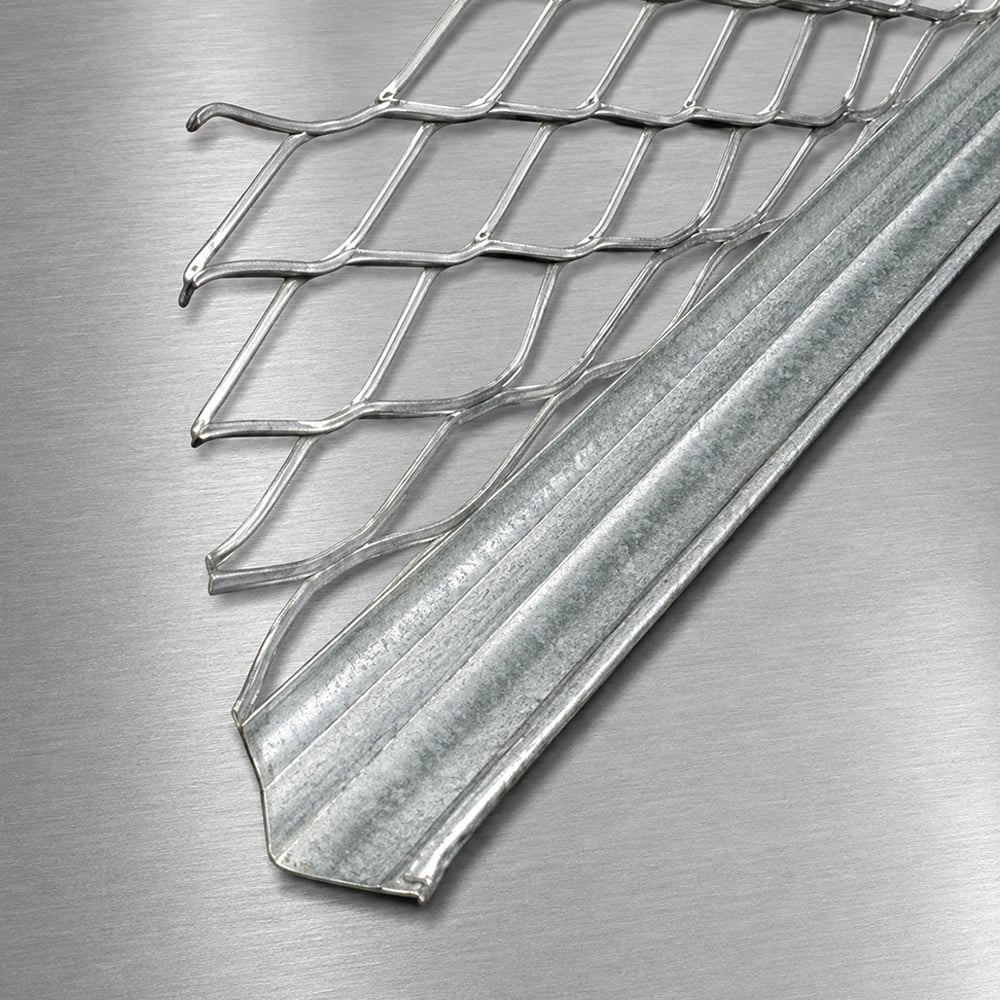
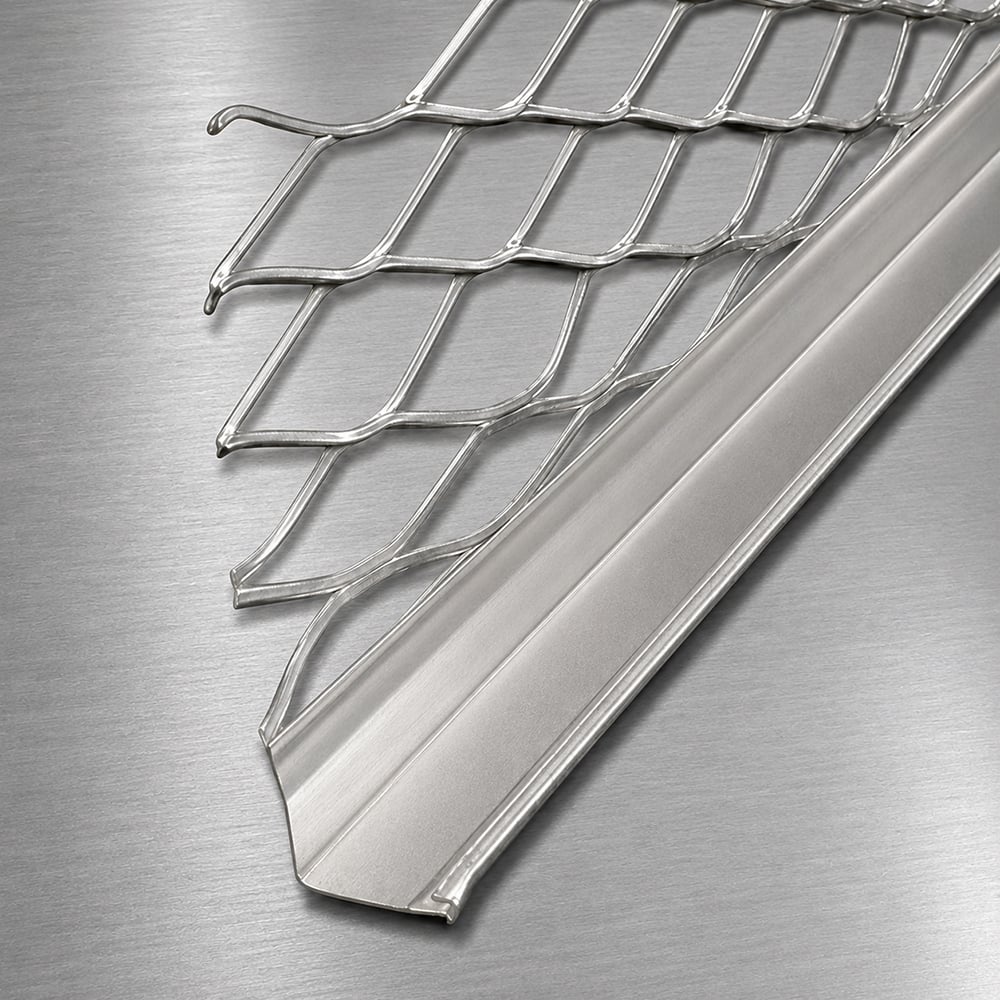
The bead is formed with two wings that sit against either side of the external corner and a central nose that establishes the finished line. Once the bead is securely positioned, plaster is worked over the wings and finished to the nose, leaving the profile incorporated into the completed surface.
Corner beads are also commonly referred to as angle beads. At Fast Fixings Online, these profiles are grouped within our corner bead range, which includes standard corner beads alongside skim and mini mesh profiles for different plaster finishes and project requirements.
Standard Corner Beads
Standard corner beads are designed for forming external corners where a traditional plaster finish is being applied. The two wings provide a secure area for fixing and plaster coverage, while the central nose establishes the line of the finished corner.
Our range includes corner beads in galvanised steel, stainless steel and uPVC. The most appropriate material will depend on the application and installation environment, so the bead profile should always be considered alongside the material specification.
✓ Forms straight, consistent external corners
✓ Helps reinforce and protect vulnerable plaster edges
✓ Provides a defined guide for the finished plaster line
✓ Available in different materials and lengths to suit project requirements
Skim & Mini Mesh Beads
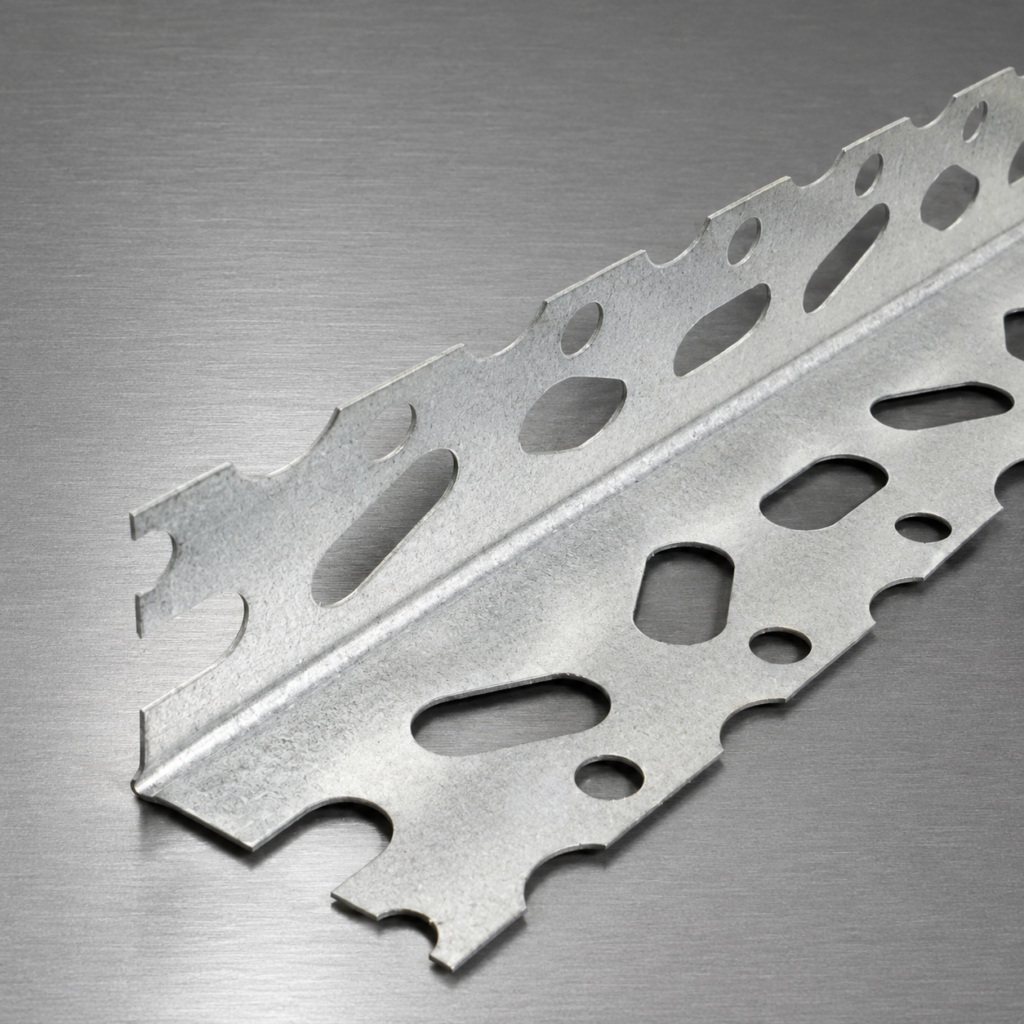
Where a thinner plaster finish is required, skim and mini mesh beads provide alternative corner profiles. Skim beads are designed for thin skim-coat finishes, while mini mesh beads use a more compact mesh wing than a standard corner bead.
Selecting the correct profile is important because the bead needs to correspond with the intended finish depth. This helps establish the correct plaster thickness and allows a consistent surface to be achieved across the corner.
Specification Tip
Check the required plaster thickness before selecting the bead. A corner profile designed for a different finish depth can make it more difficult to achieve a consistent surface and a clean, accurately formed corner.
Buying corner beads for a larger project?
Our corner bead range includes galvanised steel, stainless steel and uPVC profiles, with selected products supplied in trade box quantities for larger plastering and drylining projects.
3
What Is a Plaster Stop Bead?
A plaster stop bead is used to create a straight, defined edge where a plaster finish needs to terminate. Unlike a corner bead, it is not designed to form an external corner. Instead, the profile establishes a controlled finishing point for the plaster to be worked up to.
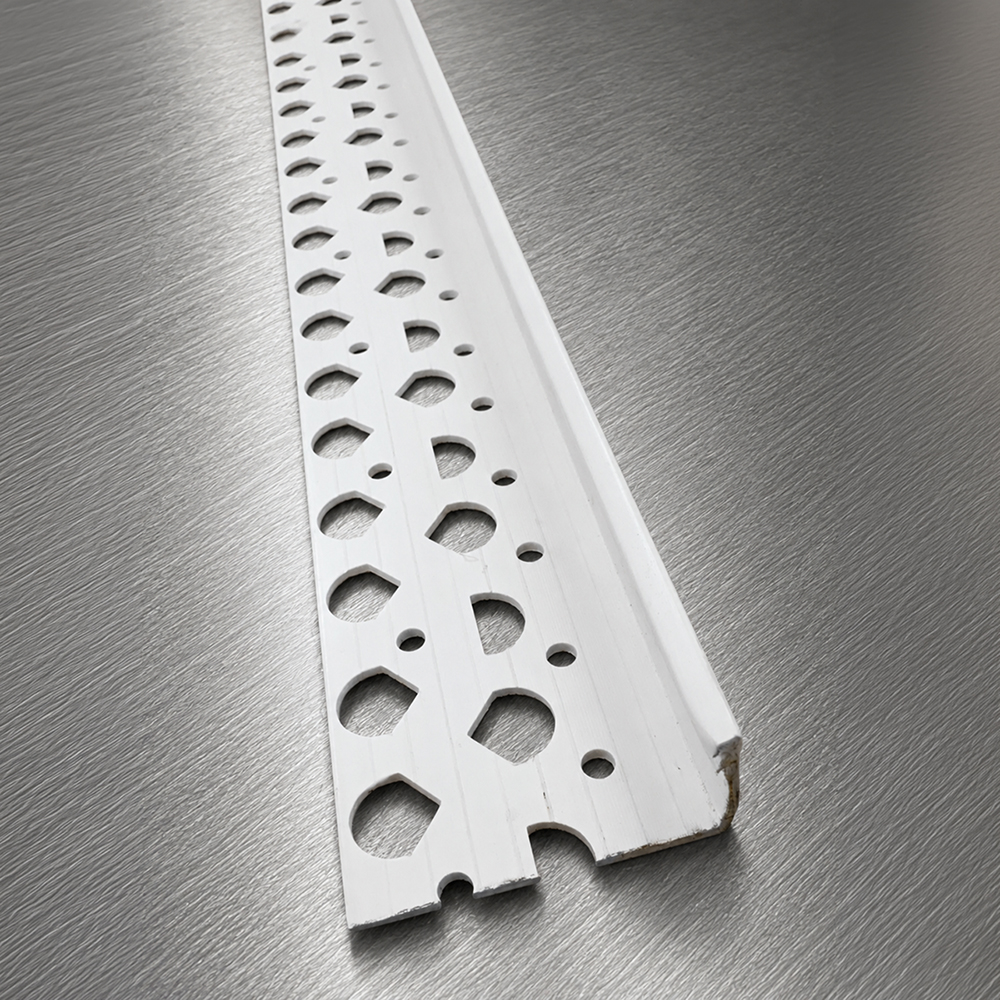
The bead typically incorporates a perforated or mesh wing that is fixed to the background and covered by the plaster, together with a raised stop edge that establishes the finished line and depth. Once plastered, this creates a neat, consistent termination rather than allowing the finish to run beyond the required point.
Plaster stop beads can be used around openings, at abutments, where plaster meets another material or finish, and wherever a clean exposed termination is required. The correct profile should be selected according to the required plaster depth, material specification and installation environment.
Standard Plaster Stop Beads
Standard plaster stop beads provide a defined edge for traditional plaster finishes. The raised stop gives the plasterer a consistent line and depth to work to, while the wing is incorporated into the plastered surface to secure the profile within the finished system.
Our plaster stop bead range includes profiles in different materials, depths and lengths, allowing the bead to be selected to suit the required finish and project specification.
✓ Creates a straight, defined termination to the plaster finish
✓ Provides a consistent edge and depth for the plaster to finish against
✓ Suitable for openings, abutments and changes between finishes
✓ Available in different depths, materials and lengths to suit project requirements
Thin-Coat Plaster Stop Beads
Where a thinner plaster finish is specified, a thin-coat stop bead provides a shallower profile suited to the reduced finish depth. It performs the same fundamental job as a standard plaster stop bead by establishing a clean termination, but the profile depth is designed for thinner finishing coats.
This is why stop beads should not be selected by length alone. The required plaster build-up needs to correspond with the depth of the stop profile so that the finished surface meets the bead correctly and produces a clean, consistent edge.
Specification Tip
Check the required plaster depth before ordering stop beads. The raised stop establishes the finishing depth, so selecting a profile that corresponds with the intended plaster build-up is important for achieving a consistent finished surface.
Buying plaster stop beads for a larger project?
Our plaster stop bead range includes a choice of materials, depths and lengths, with selected profiles supplied in trade box quantities for larger plastering and drylining projects.
4
Corner Bead vs Stop Bead: What’s the Difference?
The main difference between a corner bead and a plaster stop bead is where the profile is used and what it is designed to do. A corner bead forms and reinforces an external corner, while a plaster stop bead creates a defined termination point where the plaster finish needs to end.
Their profiles are therefore physically different. A corner bead has two wings that sit on either side of an external angle, with a central nose forming the line of the finished corner. A plaster stop bead uses a single wing with a raised stop edge, allowing the plaster to be worked up to a controlled finishing point.
Once plastered, most of each profile becomes incorporated into the finished surface. With a corner bead, the plaster is worked over the wings and finished to the central nose to create a straight, reinforced corner. With a stop bead, the plaster covers the fixing wing and finishes neatly against the stop edge.
Although they perform different functions, both profiles need to be selected with the required plaster build-up in mind. Choosing the correct bead depth helps the finished plaster meet the profile at the intended level and produces a clean, consistent result.

Corner Bead vs Stop Bead: Key Differences
| Feature | Corner Bead | Stop Bead |
|---|---|---|
| Primary purpose | Forms, reinforces and protects an external plastered corner | Creates a controlled edge where plaster or render finishes |
| Profile shape | Angled profile with wings extending across both faces of the corner | Single-sided profile with a defined stop edge for the finish |
| Typical position | External corners and projecting edges | Termination points, openings, abutments and changes of finish |
| What it does | Provides a straight corner line while helping protect the finished edge | Provides a straight, defined line for plaster or render to finish against |
| Finished appearance | The wings are covered by the finish, leaving a clean, straight external corner | The finish terminates neatly against the stop edge of the bead |
| Choosing the depth | Select a profile suited to the intended plaster or render build-up | Select a stop depth that corresponds with the required finished thickness |
5
When Should You Use Corner Bead?
Corner bead should be used wherever a plastered external corner needs to be formed, reinforced and protected. Typical applications include external wall corners, columns and boxed sections, reveals that form an external edge and other exposed corners that may be vulnerable to knocks or damage.
The type of corner bead you need depends largely on the plaster system and required finish. Standard angle beads suit traditional plaster applications, while skim and mini mesh beads are designed for thinner plaster finishes and specific internal applications.
Standard Corner Bead vs Skim Bead vs Mini Mesh Bead
| Bead Type | Choose It For | Available Options |
|---|---|---|
| Standard Angle Bead | Forming and reinforcing external corners in traditional plaster applications | Galvanised, stainless steel and uPVC |
| Skim Bead | Thin-coat and single-coat plaster corners and reveals on internal plasterboard and blockwork | Galvanised, 2.4m and 3m |
| Mini Mesh Bead | Reinforcing internal corners in thin-coat and one-coat plaster systems where an expanded mesh key is required | Galvanised, 2.4m and 3m |
Choosing the material:
For dry internal applications, galvanised steel is commonly used. Where the bead will be exposed to external conditions, moisture, condensation or extended drying times, choose a suitable stainless steel or uPVC profile instead.
6
When Should You Use a Stop Bead?
A plaster stop bead should be used where a clean, controlled termination to the plaster finish is required. Typical applications include around openings, at abutments, where plaster meets another material or detail, and at points where one finished surface needs to stop before another begins.
Once you’ve established that a stop bead is required, the next considerations are the finish depth and installation environment. The bead depth should correspond with the intended plaster build-up, while the material needs to be suitable for the conditions in which it will be installed.
Which Plaster Stop Bead Should You Choose?
| Bead Type | Choose It For | Available Depths |
|---|---|---|
| Galvanised Plaster Stop | Dry internal plastering applications where a defined termination edge is required | 10mm, 13mm & 19mm |
| Stainless Steel Plaster Stop | External applications and internal areas exposed to moisture, condensation or extended drying times | 10mm, 13mm, 16mm & 20mm |
| uPVC Plaster Stop | Corrosion-resistant applications, including external or damp-prone environments, with options for thin and deeper finish depths | 3mm, 6–8mm, 10–12mm, 15–17mm & 20–22mm |
What about thin-coat stop bead? For a thin plaster build, choose a stop bead with a shallower profile rather than using a deeper bead intended for a thicker finish. Our uPVC range starts at 3mm and includes a selection of depths up to 20–22mm, allowing the stop profile to be matched more closely to the required build-up.
7
What About Render Stop Beads?
Render stop beads work on a similar principle to plaster stop beads, creating a straight, controlled termination where the applied finish needs to end. The important difference is that they are designed for render applications rather than internal plaster finishes.
Because render stop beads are used in external systems, the required render depth, bead material and exposure conditions all need to be considered when selecting the correct profile. They can be used around openings, at changes in finish and wherever a clean, defined render edge is required.
Plaster Stop Bead or Render Stop Bead?
Choose a plaster stop bead for plastering and drylining applications. Where the termination forms part of an external render system, select a render stop bead with the appropriate depth and material for the specification.

8
Choosing the Right Material, Depth & Length
Once you know which type of bead you need, check the material, profile depth and length. The correct specification will depend on the plaster or render system, required finish depth and the environment in which the bead will be installed.
Galvanised steel, stainless steel and uPVC beads each suit different conditions, while the profile depth needs to correspond with the intended plaster or render build-up.
Which Bead Material Should You Choose?
| Material | Choose It For | Key Point |
|---|---|---|
| Galvanised Steel | General internal and suitably sheltered applications where moisture exposure is low | A widely used option for dry internal plastering |
| Stainless Steel | External applications and internal areas exposed to moisture, condensation or extended drying times | Provides greater corrosion resistance |
| uPVC | Suitable plaster and render systems where a corrosion-resistant profile is required | Will not rust or corrode and is available in a range of profile depths |
Don't forget the depth and length.
A longer bead is not necessarily the right bead if its profile depth does not suit the required finish. Check the full specification before ordering and choose in this order: Profile → Material → Depth → Length.
9
Buying Corner & Stop Beads for Larger Projects
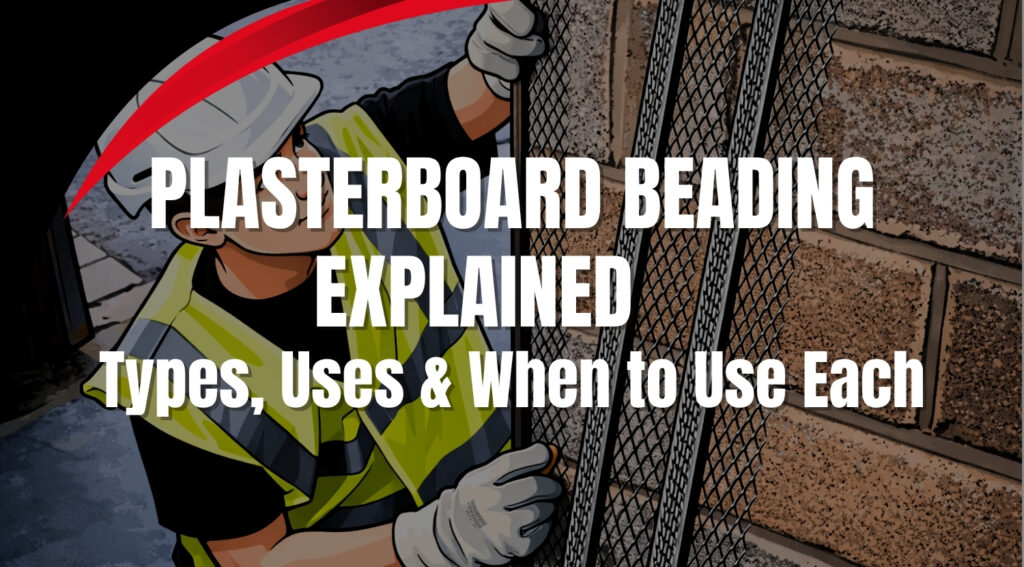
For larger plastering, drylining and construction projects, ordering the correct bead specification and quantity from the outset can help maintain a consistent finish across the job. At Fast Fixings Online, our range includes corner beads, plaster stop beads and render stop beads in a choice of materials, depths and lengths.
Many profiles are supplied in trade boxes of 25 or 50, making it easier to order for larger project requirements, with nationwide delivery available across our plasterboard beading range.
Before ordering:
Check the required profile, material, depth, length and box quantity against the project specification, particularly where multiple bead types are being used across the same job.
10
Corner & Stop Bead FAQs
Still deciding which bead is right for your project? Here are answers to some of the most common questions about corner beads, plaster stop beads and render stop beads.
Is corner bead the same as angle bead?
Yes. “Angle bead” and “corner bead” are commonly used to describe beads designed to form and reinforce external plaster corners. At Fast Fixings Online, we organise these products under Corner Beads, with standard, skim and mini mesh profiles available for different plaster finishes and applications.
Can you use stop bead on a corner?
A plaster stop bead is designed to create a defined termination point where a plaster finish ends, rather than to form and reinforce an external corner. Where two plastered surfaces meet to form an external corner, a suitable corner bead should normally be selected instead.
What's the difference between skim bead and corner bead?
Both are used to form external corners, but they are intended for different plaster finishes. A standard corner bead is used for traditional plaster applications, while a skim bead has a shallower profile designed for thinner skim-coat finishes. The bead should always be selected to suit the intended plaster depth.
What depth corner bead do I need?
The bead depth should correspond with the specified plaster build-up. A profile that is too deep or too shallow for the intended finish can make it difficult to achieve a consistent surface and clean corner. Check the required plaster thickness before selecting the bead rather than choosing by length alone.
Can galvanised corner bead be used outside?
Galvanised steel beads are generally intended for dry internal or suitably sheltered applications unless the relevant product or system specification states otherwise. For external, damp or more demanding environments, a more corrosion-resistant option such as stainless steel or an appropriate uPVC bead may be required. Always check the requirements of the plaster or render system being used.
What's the difference between plaster stop bead and render stop bead?
Both create a controlled finishing point, but they are intended for different systems. Plaster stop beads provide a defined termination for plaster finishes, while render stop beads are designed for render applications. For external render, the bead material and profile depth should also be appropriate for the specified system and exposure conditions.

CORNER, PLASTER & RENDER BEADS
-
 Plaster Stop - Galvanised - 2.4M x 13mm - Box of 50
£129.16 ex VAT(£154.99 inc VAT)
-
Plaster Stop - uPVC - 2.5M x 20-22mm - Box of 25
£127.49 ex VAT(£152.99 inc VAT)
-
Plaster Stop - Stainless Steel - 3M x 10mm - Box of 50
£287.49 ex VAT(£344.99 inc VAT)
-
 Skim Bead - Galvanised - 3M - Box of 50
£105.83 ex VAT(£126.99 inc VAT)
-
Plaster Stop - Galvanised - 3M x 19mm - Box of 50
£690.83 ex VAT(£828.99 inc VAT)
-
Plaster Stop - Galvanised - 3M x 13mm - Box of 50
£145.83 ex VAT(£174.99 inc VAT)
-
Standard Angle Bead - uPVC - 2.5m x 6-10mm - Box of 25
£108.33 ex VAT(£129.99 inc VAT)